Saumya, Founder | 4 mins
Toddlers touch everything quickly. The floor, a toy wheel, a snack, the sofa edge and then their mouth. Foaming hand wash feels easy because it spreads fast and looks fun. But safer and more effective depends on the formula, not the foam.
Table of Contents
- Are Foaming Hand Washes Safer or More Effective for Toddlers?
- Why is baby-specific hand wash recommended?
- Why repeated hand washing matters for toddlers
- What should you avoid in toddler hand wash?
- What can I use to clean baby hands?
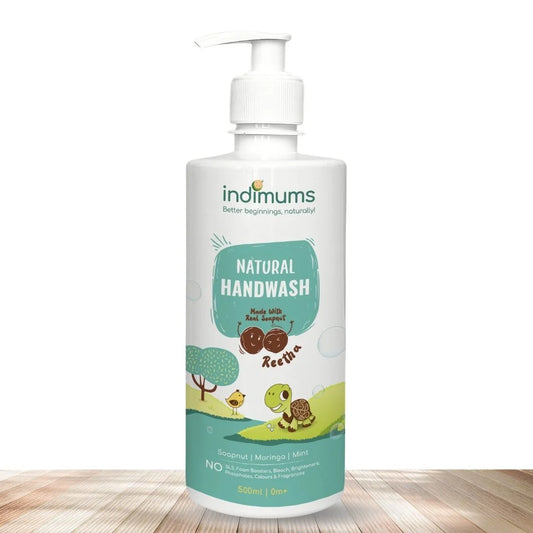
- The Indimums Baby Hand Wash
- How It Compares
- FAQs
Are Foaming Hand Washes Safer or More Effective for Toddlers?
Quick Answer: Foaming hand washes are not automatically safer or more effective for toddlers. They can help with spreading and rinsing, but the ingredient list matters more than the format. Choose a mild hand wash without SLS, SLES, triclosan, alcohol-heavy formulas or synthetic fragrance.
Why is baby-specific hand wash recommended?
A toddler's hand wash is used many times in a day, not once in a while. That repeated exposure makes mildness important. A formula that feels fine once can still dry the skin when used after play, meals and diaper changes.
The American Academy of Pediatrics supports handwashing as a core hygiene habit for children. In parent language, clean hands matter, but the wash should not leave the skin tight. Here is what most people miss: foam is a texture, not proof of safety.
Why repeated hand washing matters for toddlers
Thin hand skin. Toddler skin is still developing. Frequent washing can disturb natural moisture faster than it does in adult hands.
Compounding exposure. Hand wash touches the same skin several times a day. Small drying effects can add up over a week.
Hand-to-mouth contact. Toddlers put fingers near their mouth often. A clean-rinsing formula is important because the hands return to food, toys and lips quickly.
What should you avoid in toddler hand wash?
- SLS and SLES - strong surfactants can dry toddler hands.
- Triclosan - an antibacterial agent not needed for routine hand washing.
- Alcohol-heavy formulas - can sting and dry with repeated use.
- Synthetic fragrance - scent adds no hygiene benefit.
- Phenoxyethanol-heavy routines - not ideal for frequent baby hand contact.
- Synthetic dyes - colour is unnecessary for clean hands.
The safest routine is not the strongest-smelling one. It is the one your child can repeat without drying the skin.
What can I use to clean baby hands?
- Reetha (soapnut) - effective plant-based cleansing at a baby-suitable pH.
- Neem - supports natural antimicrobial hygiene without triclosan.
- Aloe vera - soothes and hydrates through repeated washing.
- Glycerin - helps maintain moisture balance.
- Clean rinsing - reduces residue before hands go near food or mouth.
- Mild scent approach - avoids synthetic fragrance as the hygiene signal.
If your toddler's hands feel rough by evening, the hand wash may be too strong for the number of times it is used.
The Indimums Baby Hand Wash
The Indimums Baby Hand Wash uses Reetha (soapnut) for effective plant-based cleansing at a pH compatible with infant skin, Neem for natural antimicrobial support without triclosan, Aloe vera to soothe and hydrate and Glycerin to maintain moisture balance through repeated daily washing.
It also uses essential oils in safe functional concentrations, not synthetic fragrance. It does not contain SLS, SLES, triclosan, parabens, synthetic fragrance, alcohol, phenoxyethanol or synthetic dyes. Many parents who switch notice handwashing feels easier to repeat without the dry, tight after-feel.

How It Compares
| Aspect | Indimums Baby Hand Wash | Typical foaming hand wash |
|---|---|---|
| Cleansing base | Reetha cleanses with plant-derived, pH-compatible saponins. | SLS or SLES may create foam but can dry hands. |
| Fragrance | Essential oils in safe functional concentrations, no synthetic fragrance. | Artificial fragrance may remain on hands. |
| Key active ingredients | Reetha, Neem, Aloe vera and Glycerin clean while supporting moisture. | Often relies on foam boosters, scent or synthetic antibacterial agents. |
| Skin impact | Built for repeated daily washing without harsh drying. | May feel clean once but dry hands with repetition. |
| Suitable for toddlers | No SLS, SLES, triclosan, alcohol, phenoxyethanol or synthetic dyes. | May include antibacterial actives or scent not needed daily. |
| Preservatives | No parabens or phenoxyethanol. | Preservative systems vary by formula. |
| Philosophy | Clean hands should not mean stripped hands. | Often treats foam as proof of effectiveness. |
Hand soap questions usually come next
This blog has answered whether foaming hand wash is automatically safer or more effective. The next question is whether regular hand soap can do the same job for baby hands. Reading that next helps you compare format, formula and daily frequency together.
Read next: Can You Wash Baby Hands With Hand Soap?
Foam is not the safety signal
You started with a toddler whose hands touch the whole day. Foam can make washing easier, but the formula still has to respect skin that is washed again and again. Clean hands should come from a mild, repeatable routine rather than a strong sensory cue. What you leave out matters as much as what you put in. The best hand wash is the one you can use often without regret.
FAQs
Q1. Are foaming hand washes safer or more effective for toddlers?
A1. Not automatically. Foam helps spread the wash, but ingredients decide whether it is suitable for toddler skin.
Q2. Why is baby-specific hand wash recommended?
A2. Baby-specific hand wash is usually milder for repeated use. Toddlers wash often, so drying ingredients matter more.
Q3. What can I use to clean baby hands?
A3. Use water and a mild baby hand wash when hands are visibly dirty or before food. Choose one that rinses cleanly.
Q4. Are foaming hand washes better than liquid hand wash?
A4. Not always. A non-foaming wash with better ingredients can be gentler than a foaming one with harsh surfactants.
Q5. How often should toddlers wash hands in India?
A5. Wash after outdoor play, bathroom use, diaper changes and before eating. Use a mild formula because frequency is high.
Q6. Should toddler hand wash be antibacterial?
A6. Routine toddler hand wash does not need triclosan or strong antibacterial agents. Proper washing and rinsing matter more.