Saumya, Founder | 4 mins
Baby hands move from food to toys, from the floor to your shoulder and then straight to the mouth. When the hand-wash bottle is empty, the baby shampoo beside the bath looks like an easy substitute. It is mild and already made for babies, but frequent handwashing asks a different question from occasional hair washing.
Table of Contents
- Can I Use Baby Shampoo as Hand Wash?
- Why Hand Washing Is a Different Job From Hair Washing
- Baby Shampoo vs Baby Hand Wash — What Is Actually Different?
- Why It Happens
- What to Avoid
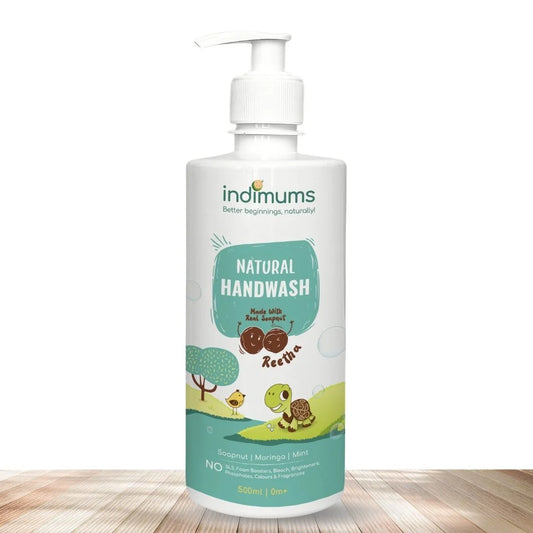
- The Indimums Natural Baby Hand Wash
- What Helps and What to Choose
- FAQs
Can I Use Baby Shampoo as Hand Wash?
Quick Answer: Baby shampoo can clean hands occasionally when hand wash is unavailable, provided it is mild and rinsed thoroughly. For repeated washing after meals, crawling and outdoor play, a dedicated baby hand wash is the better fit because it is formulated around frequent skin contact and quick sink rinsing rather than scalp cleansing and hair feel.
Why Hand Washing Is a Different Job From Hair Washing
Baby shampoo and baby hand wash can both be mild, but they are selected for different surfaces and different routines.
Shampoo is designed around scalp sebum, sweat and hair texture. It needs to remove oil and buildup without making fine hair rough. Its formula may include ingredients that support softness or hair feel, and it is normally rinsed during a bath with generous water.
Hand wash is used after food, floor play, outdoor contact and toilet or diaper-related moments. Those washes can happen many times a day. The product needs to remove ordinary soil while remaining comfortable across repeated use and rinsing quickly from fingers, nails and finger webs.
Hands returning to the mouth makes thorough rinsing especially important, but this does not mean shampoo inevitably leaves unsafe residue. The practical mismatch is frequency and purpose: a formula that is mild enough for occasional substitution is not automatically the most suitable everyday hand-cleaning formula.
Baby Shampoo vs Baby Hand Wash — What Is Actually Different?
Cleansing Priorities
Baby shampoo is calibrated around oil-based scalp buildup, sweat and pre-bath hair oil. Hand wash is chosen around food residue, dust and frequently touched surfaces. Surfactants can remove several kinds of soil, so the difference is not absolute, but the complete formula and intended frequency are not identical.
Supporting Ingredients
Shampoo may include ingredients chosen for hair texture and scalp comfort. A kids hand wash may use ingredients chosen for repeated skin cleansing and an easy after-rinse feel. Neither category should rely on strong synthetic fragrance, harsh sulphates or heavy antibacterial claims to prove it works.
Rinsing Conditions
Hair is usually rinsed for longer during bath time. Hands may receive a much shorter sink rinse, so technique matters: use a small amount, rub all surfaces for about 20 seconds, rinse thoroughly and dry gently. Any cleanser can remain if too much is used or rinsing is rushed.
Occasionally, baby shampoo is a reasonable substitute. Routinely, dedicated hand wash is the closer match for the job.
Why It Happens
Repeated washing changes the skin calculation. Each wash removes some surface oil along with dirt. A formula that feels fine once may leave the knuckles tight after the sixth wash, especially when the weather is dry or the child has eczema-prone skin.
Hand-to-mouth behaviour also raises the importance of complete rinsing. The goal is not to fear trace contact from every cleanser; it is to choose a mild formula, use only what is needed and remove it properly under running water.
What to Avoid
- SLS and SLES: can feel stripping across repeated use on dry or sensitive hands
- Triclosan: routine handwashing does not need an antibacterial active when soap technique is adequate
- Strong synthetic fragrance: adds scent without improving soil removal
- Alcohol-heavy cleanser as the default: may worsen dryness when used repeatedly
- Too much product or rushed rinsing: increases the chance that cleanser remains around nails and finger webs
The Indimums Natural Baby Hand Wash
The Indimums Natural Hand Wash for Kids is built for the hand-hygiene routine that has to work many times before lunch, not just once.
Reetha removes everyday dirt through plant-derived saponins, while Shikakai supports a comfortable after-rinse feel. Moringa Leaf Extract supports skin health through repeated washing, and Mint Essential Oil gives a functional clean feel without synthetic fragrance.
What is not in it: SLS, SLES, triclosan, synthetic fragrance or alcohol-heavy cleansing.
“It cleans after meals and play without making the hands feel tight.” — Indimums Parent Community

Choose a hand wash built for the many small wash moments that happen between breakfast and bedtime.
What Helps and What to Choose
- A mild cleansing base: enough to remove ordinary food and surface dirt without strong sulphates
- No synthetic fragrance: hygiene does not need perfume left on the hands
- Small amounts: one measured pump or less is easier to rinse than a palmful
- Twenty seconds of coverage: rub palms, backs, fingers, nails and thumbs before rinsing
- Skin observation: move to a milder routine if knuckles become tight, red or cracked
The Next Question Is the Ingredient List
This blog answered whether baby shampoo works as hand wash and why a dedicated hand wash fits repeated use more closely. The connected question is which ingredients belong in a gentle infant hand cleanser and which categories add little value. Reading that next helps you evaluate the label rather than relying only on the product name.
Read next: What Ingredients Should I Look for in a Gentle Hand Cleanser for Infants?
Conclusion: Baby Shampoo Is Mild — but Mild Is Not the Same as the Right Formula
You started with a practical question: the baby shampoo is already on the shelf, so why not use it for hands too? Occasionally, that is fine. Routinely, hand washing happens more often, uses a shorter rinse and follows contact with food, floors and shared surfaces. A dedicated hand wash is a small distinction that compounds across the day, especially when the formula stays mild and the rinsing stays thorough. Choose the product for the job without turning one substitute wash into a source of worry. What you leave out matters as much as what you put in.
FAQs
Q1. Can I use baby shampoo as hand wash for my baby?
A1. Occasionally, yes. A mild baby shampoo can loosen ordinary dirt when hand wash is unavailable, but it is not specifically designed around repeated sink washing. For routine use after meals, floor play and outdoor contact, a mild dedicated hand wash gives you a formula and rinse experience made for that frequency.
Q2. Can baby shampoo be used as hand soap?
A2. It can work as an occasional substitute when you rinse the hands thoroughly. The limitation is not that shampoo cannot clean, but that its formula is selected for scalp oil, hair feel and bath-time rinsing rather than frequent handwashing. A dedicated kids hand wash is the more predictable everyday choice.
Q3. Is baby shampoo gentle enough for hand washing?
A3. Many baby shampoos are mild enough for occasional handwashing, but mildness is only one part of the decision. The cleanser also needs to work across repeated washes without leaving hands tight, and it should rinse quickly before hands return to food or the mouth. Watch the skin response rather than relying on the baby label alone.
Q4. Baby shampoo vs baby hand wash — which is better for daily hand cleaning?
A4. Baby hand wash is the better fit for daily hand cleaning because it is designed around food, floor and shared-surface contact. Shampoo is designed around scalp sebum, sweat and hair feel. Either product still needs a mild cleansing system and thorough rinsing; the dedicated hand wash simply matches the job more closely.
Q5. Can I use baby shampoo to wash baby hands before meals?
A5. Yes, occasionally, when no hand wash is available and the hands are rinsed thoroughly. For routine pre-meal washing, use a dedicated mild hand wash because this is a frequent hygiene moment followed immediately by food and mouth contact. Use a small amount and rinse between the fingers and around the nails.
Q6. What is the difference between baby shampoo and baby hand wash ingredients?
A6. Baby shampoo ingredients are chosen to remove scalp oil and sweat while supporting hair texture. Baby hand wash ingredients are chosen for repeated removal of food, floor and surface residue from skin. In the current Indimums formulas, the hand wash uses Reetha, Shikakai and Moringa Leaf Extract, while the shampoo uses a different scalp-focused ingredient system.