Saumya, Founder | 4 mins
Some baths are simple. Warm water, a soft towel and a baby who mostly needs settling. Other baths come after sweat, milk dribbles, oil massage or outdoor dust. That is when baby body wash becomes a real question, not just a product on the shelf.
Table of Contents
- When to Use Baby Body Wash?
- Can I wash my baby with just water?
- Why Babies Do Not Need Strong Cleansing Every Bath
- When to start baby skin care?
- What are the safest baby body wash ingredients for sensitive skin?
- The Indimums Baby Body Wash
- How It Compares
- The Cleanser Format Still Matters After Timing
- FAQs
When to Use Baby Body Wash?
Quick Answer: Use baby body wash when sweat, milk, oil, stool residue or outdoor dirt needs cleansing. Plain lukewarm water is enough for some baths — especially for newborns — when the skin is not sticky or oily. A good body wash should rinse cleanly and leave no tight or dry feeling after the bath. If skin feels dry within an hour of washing, the formula or frequency may need adjusting.
Can I wash my baby with just water?
Parents ask because they do not want to under-clean or over-clean. The American Academy of Dermatology recommends gentle, fragrance-free care for sensitive infant skin and notes that newborns do not need daily full baths. In parent language, the bath should match what touched the skin that day — sweat, milk and oil need a wash, clean dry skin does not. Here is what most people miss: body wash is a tool, not a daily rule.
Why Babies Do Not Need Strong Cleansing Every Bath
Barrier maturity. Baby skin is still building its outer protective layer, so unnecessary cleansing can increase moisture loss.
Contact pattern. Sweat, milk and oil need removal, but quiet indoor days may not. Cleaning should respond to residue, not habit.
When to start baby skin care?
- SLS and SLES - can strip the lipid layer that helps baby skin hold moisture
- Artificial fragrance - can remain on skin after rinsing and add unnecessary contact
- Alcohol-heavy formulas - can make already delicate skin feel drier
- Triclosan - is unnecessary for a baby bath routine
- Synthetic dyes - add colour without helping the skin
- Phenoxyethanol - is worth avoiding for frequent baby-skin contact
None of this means parents need to panic. It only means the ingredient list should do fewer, clearer jobs.
What are the safest baby body wash ingredients for sensitive skin?
- Reetha (soapnut) - cleanses with plant-derived saponins at a baby-suitable pH
- Aloe vera - adds hydration during the wash itself
- Neem - supports skin exposed to sweat and outdoor dust
- Low-lather cleansing - helps parents avoid confusing foam with cleanliness
- Easy rinsing - reduces residue after bath time
For Reetha-based cleansing, you can read more about soapnut here.
If this concern feels familiar, the calmer answer is usually a better foundation, not a louder product.
The Indimums Baby Body Wash
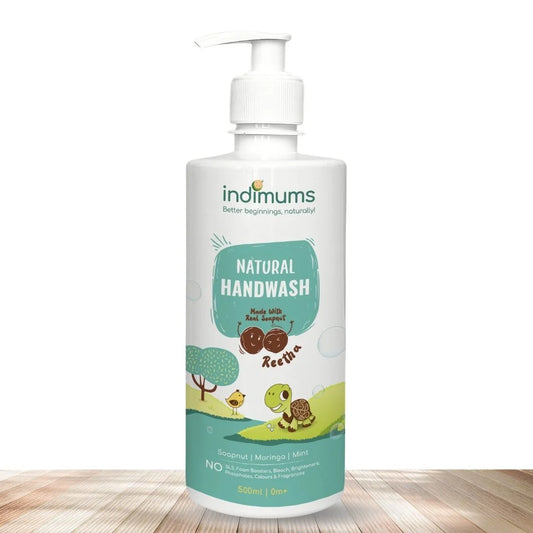
The Indimums Natural Baby Body Wash is built for parents who want the bath to do its job without doing too much.
What is in it:
- Reetha (soapnut) - plant-derived, pH-compatible cleansing that removes residue without stripping
- Aloe vera - soothes and hydrates during washing
- Neem - gives gentle antimicrobial support
- Essential oils in safe functional concentrations - provide functional scent without synthetic fragrance
What is not in it: SLS, SLES, parabens, phenoxyethanol, artificial fragrance, alcohol, synthetic dyes, triclosan.
"After switching, bath time felt calmer and her skin did not feel tight after drying." - Indimums Parent Community
Many parents who switch notice that the routine feels calmer because the formula is not trying to impress with foam, perfume or coating.

How It Compares
| Aspect | The Indimums Baby Body Wash | Typical baby body wash |
|---|---|---|
| Cleansing or moisturising base | Reetha (soapnut) - plant-derived, pH-compatible cleansing that removes residue without stripping | Usually synthetic surfactant, soap base or heavy coating oil |
| Fragrance | provide functional scent without synthetic fragrance | Often built around perfume or strong scent |
| Key active ingredients | Reetha (soapnut), Aloe vera, Neem, Essential oils in safe functional concentrations | Often listed broadly without explaining function |
| Skin, scalp or surface impact | Designed around residue-conscious baby contact | Often designed around adult sensory expectations |
| Suitable for sensitive or newborn skin | Avoids SLS, SLES, parabens, phenoxyethanol | May include avoidable fragrance, surfactants or coating agents |
| Preservatives | Avoids phenoxyethanol and parabens | Typical formulas may use stronger preservative systems |
| Philosophy | Foundation-first care that removes what is not needed | More foam, scent or shine is often treated as proof |
The Cleanser Format Still Matters After Timing
This blog answers when baby body wash belongs in the bath. The linked blog compares soap and body wash so you can choose the gentler format. Read it next if you know when to cleanse but are unsure what to use.
Read next: Which Is Best for Kids: Soap or Body Wash?
The right bath is based on the day your baby had
You began with the everyday bath question: water today, or body wash? The answer changes with sweat, milk, oil and dirt because baby care should respond to the day your baby actually had. Gentle cleansing works when it removes what needs removing and leaves the barrier alone when it can. Better beginnings naturally.
FAQs
Q1. When to use baby body wash?
A1. Use it when sweat, milk, oil, poop residue or outdoor dirt needs cleansing. Water is enough for some baths.
Q2. Can I wash my baby with just water?
A2. Yes, especially for newborns or low-sweat days when there is no sticky residue.
Q3. How often should I bathe my newborn with body wash?
A3. Not daily unless needed. Use body wash only when water alone will not clean residue.
Q4. Does Indian summer mean daily body wash?
A4. Not always. Sweat may need cleansing, but some baths can still be water-only.
Q5. Can body wash be used on baby face?
A5. Use caution. Face skin is delicate, and many days plain water is enough.
Q6. Are tear-free formulas necessary?
A6. Tear-free can help comfort, but ingredient safety and rinsability matter more.