Saumya, Founder | 3 mins
A toy falls on the floor. The baby picks it up. A snack follows. Then fingers go into the mouth, onto the cot rail, back to the toy. In monsoon, parents often watch rainwater and wet shoes carefully, but the quiet hand-to-mouth loop keeps happening all day.
Table of Contents
- Why Babies Fall Sick More in Monsoon — The Hand Hygiene Gap Most Parents Miss
- Why monsoon makes hand hygiene harder
- How Indimums Baby Hand Wash supports repeated monsoon washing
- What to avoid in baby hand cleaning
- What actually closes the hand hygiene gap
- How It Compares
- FAQs
Why Babies Fall Sick More in Monsoon — The Hand Hygiene Gap Most Parents Miss
Quick Answer: Babies fall sick more in monsoon partly because hands touch damp floors, toys, shoes, food and faces more often. The hygiene gap is not one missed wash; it is the many small moments when baby hands move from surface to mouth before anyone notices.
Why monsoon makes hand hygiene harder
Monsoon keeps homes more closed, floors more damp and surfaces touched more often. Babies explore through crawling, grabbing and mouthing. That means the hand is not just a hand; it becomes the carrier between floor, toy, bottle, snack and mouth.
This is why illness prevention can feel confusing. A parent may clean the floor, boil the bottle and avoid rainwater, but the baby's hand still moves across the cot rail, the toy basket, the caregiver's phone and then the mouth in one quiet loop.
Public health handwashing guidance is simple for a reason: soap and water remove germs from hands before they move elsewhere. For parents, the challenge is not knowing that handwashing matters. It is remembering the small transitions that happen before meals, bottles and naps.
How Indimums Baby Hand Wash supports repeated monsoon washing
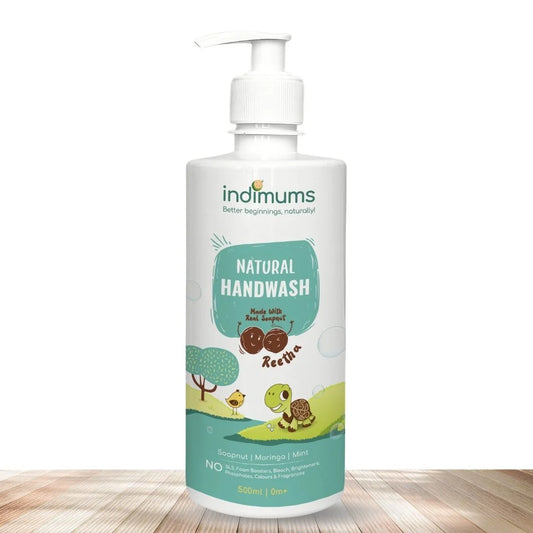
The Indimums Natural Baby Hand Wash is built for the hand hygiene routine that has to work many times before lunch — not just once. Reetha helps remove dirt and germs without stripping, Shikakai supports soft-feeling hands after washing, Moringa leaf extract supports skin health through repeated washing and Mint essential oil gives a clean feel without synthetic fragrance.
We avoid SLS, SLES, triclosan, synthetic fragrance, alcohol-heavy positioning and parabens because monsoon hand hygiene has to be repeatable. A wash that dries hands out becomes harder to use consistently.

What to avoid in baby hand cleaning
Avoid making hand care either too casual or too harsh. A quick wipe may not remove visible dirt, but repeated strong washing can dry the skin and make hands uncomfortable.
- Waiting only for visible dirt before washing hands
- Using adult antibacterial washes with triclosan-style positioning
- Relying on strong fragrance to signal cleanliness
- Using sanitizer as the default before every snack
- Ignoring toys that move between floor and mouth
- Scrubbing baby hands roughly during repeated washes
What actually closes the hand hygiene gap
Think in moments, not minutes. Wash baby hands before food, after crawling on shared floors, after outdoor travel, after touching shoes or bags, and after play with toys that were on the floor. Caregiver hands matter too, especially before bottles, meals and diaper changes.
Build the routine around places where germs move, not around panic. Keep hand washing close to snack time, bottle handling, floor play and coming home from outside. These are the points where one good wash can interrupt several contacts at once.
Keep a small routine near the sink: wet, wash gently, rinse fully, pat dry. If hands are washed often, drying matters because damp hands can feel uncomfortable and attract more grime during play.
Clean frequently mouthed toys during monsoon. The hand hygiene gap often sits between the toy and the hand, not only on the hand itself. If your baby resists washing, make it short and predictable rather than forceful. A calm repeated routine is more useful than one perfect wash followed by avoidance the rest of the day.
For caregivers, the same rule applies. Clean your hands before feeding, after diaper changes and after handling damp shoes, delivery bags or floor cloths.
How It Compares
| Aspect | Other hand wash | Indimums approach |
| Cleansing base | May use stronger adult-style surfactants | Reetha supports gentle repeated cleansing |
| Fragrance | Synthetic scent may signal clean hands | Mint essential oil in functional concentration |
| Key active ingredients | Often focused on antibacterial claims | Reetha, Shikakai, Moringa leaf extract and Mint essential oil |
| Hand impact | Can feel drying with frequent use | Made for repeat washing without harsh feel |
| Sensitive skin fit | May not suit baby hand-to-mouth contact | Designed for children's daily hand hygiene |
| Free-from choices | May include SLS, triclosan, alcohol or perfume | No SLS, SLES, triclosan, synthetic fragrance or parabens |
| Philosophy | Kill the strongest smell of dirt | Clean at the right moments, gently enough to repeat |
When hand washing becomes a soap question
This blog explains the missed moments that let germs travel from surfaces to mouth. The next question is whether ordinary hand soap is suitable for baby hands that are washed many times a day. Read next: Can You Wash Baby Hands With Hand Soap? Read This First
The smallest hands touch the most things
You began with the monsoon worry every parent knows: why does illness feel closer when the weather changes? The answer is often in tiny movements, not dramatic exposure. A toy, a floor, a snack, a thumb. When hand cleaning happens at those transition points, the routine becomes protective without becoming fearful. Questioning is also care.
FAQs
Q1. Why do babies fall sick more in monsoon?
A1. Monsoon increases contact with damp surfaces, indoor crowding and germs carried on hands, toys and food items. For babies, hand-to-mouth behaviour makes that exposure more frequent.
Q2. What is the hand hygiene gap most parents miss?
A2. Parents often wash hands after obvious dirt but miss transitions: after crawling, before snacks, after touching shoes, after travel and before bottle handling. Those small moments repeat many times daily.
Q3. Can I use sanitizer on baby hands instead of washing?
A3. Use soap and water when hands are visibly dirty or before eating. Sanitizer can be useful in some situations for older children, but babies often put hands in the mouth, so washing is the calmer default.
Q4. How often should I wash baby hands in monsoon?
A4. Wash at key moments rather than on a timer: before food, after outdoor contact, after crawling on shared floors and after diaper changes around the caregiver. Too much washing without moisture support can dry skin.
Q5. What kind of hand wash is better for babies?
A5. Choose a hand wash that cleans without harsh fragrance, triclosan or strong drying surfactants. Baby hands may be washed repeatedly, so the formula should support skin comfort.
Q6. Do toys and hands both need cleaning in monsoon?
A6. Yes, because toys often become the bridge between floor and mouth. Clean hands and frequently mouthed toys together, especially after travel, playdates or floor play.