Saumya, Founder | 3 mins
The onesie comes out of the wash looking clean. It dries slowly near the window, gets folded at night, and the next morning there it is: that dull musty smell. Monsoon laundry can feel unfair because the clothes look washed, but the fabric has not truly finished drying.
Table of Contents
- Why Baby Clothes Smell Musty in Monsoon Even After Washing — What Is Actually Happening
- Why clean baby clothes still smell musty
- How Indimums Baby Laundry Detergent supports monsoon washing
- What to avoid in monsoon laundry
- What actually helps baby clothes dry fresher
- How It Compares
- FAQs
Why Baby Clothes Smell Musty in Monsoon Even After Washing — What Is Actually Happening
Quick Answer: Baby clothes smell musty in monsoon because fabric stays damp too long, detergent residue holds moisture, and clothes may be stored before seams are fully dry. The issue is usually drying time plus residue, not just the detergent brand.
Why clean baby clothes still smell musty
Monsoon changes drying more than washing. Baby clothes have small folds, waistbands, layered seams, bib edges and cloth nappies that can stay damp long after the flat fabric feels dry. That damp pocket is where musty smell begins.
If detergent or fabric softener residue remains in the fibres, it can hold odour more easily. A shirt may look bright and clean but still carry a film that traps moisture. When humidity is high, that film has more time to become noticeable.
Baby clothes make this more obvious because they are washed so frequently: milk dribbles, spit-up, sweat, food stains, diaper leaks and oil massage residue can all enter the same laundry pile. If the load is crowded, those residues may loosen but not rinse away completely.
Laundry hygiene guidance often points to the same practical truth: moisture plus time encourages odour. In parent language, washed is not the same as dry, and dry on the surface is not the same as dry through the seam.
How Indimums Baby Laundry Detergent supports monsoon washing
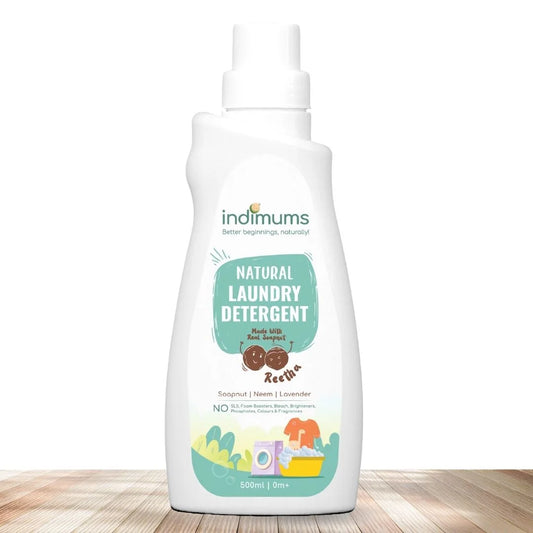
The Indimums Natural Baby Laundry Detergent is built for the specific problem monsoon creates — fabric that carries residue into slow drying and comes out smelling like it was never washed. Reetha helps lift stains and odour without synthetic surfactant residue, Shikakai supports fabric softness without fabric softener chemicals, Neem seed extract supports fabric hygiene and Lavender essential oil gives a mild functional scent without synthetic fragrance.
We avoid SLS, synthetic fragrance, optical brighteners and parabens because baby clothes do not need perfume or coating to feel clean. In monsoon, lower-residue washing is especially important because damp fabric sits close to baby skin.

What to avoid in monsoon laundry
When clothes smell musty, the instinct is to add more detergent or a stronger scent. That can hide the problem for a few hours while making residue worse for the next wash.
- Overloading the washing machine so baby clothes cannot rinse freely
- Adding extra detergent to chase smell
- Using fabric softener or strong perfume on baby clothes
- Leaving wet clothes in the machine after the cycle ends
- Folding clothes before seams and waistbands are fully dry
- Drying thick baby layers without airflow
What actually helps baby clothes dry fresher
Wash smaller loads in monsoon. Baby clothes need room to move so detergent can reach the fabric and rinse out clearly. If there is smell after washing, run a rinse-and-spin rather than adding perfume.
Dry with space between garments. Turn thick waistbands, socks and cloth layers so trapped areas face air. A fan, dehumidified room or balcony with airflow helps more than direct sun on a still, humid day.
Store only when fully dry. Touch the seams, underarms, bib binding and diaper-area cloth. If those feel cool or heavy, give them more time. Musty smell often begins after folding, not during washing.
If a batch already smells musty, do not mix it back with fresh clothes. Rewash that small batch, rinse clearly and dry with more spacing. One damp-smelling garment can make a drawer feel stale, especially when baby clothes are packed tightly.
For bibs, socks and cloth nappies, dry time should be judged by the thickest part, not the largest surface. That small habit prevents most surprise smell the next morning.
It also keeps you from rewashing clean baby clothes simply because they were stored too early in a closed drawer.
How It Compares
| Aspect | Other laundry detergent | Indimums approach |
| Cleansing base | May rely on synthetic surfactants | Reetha and Shikakai support plant-based fabric cleaning |
| Fragrance | Synthetic scent may cover musty smell | Lavender essential oil in functional concentration |
| Key active ingredients | Often built for adult fabric loads | Reetha, Shikakai, Neem seed extract and Lavender essential oil |
| Fabric impact | Residue may hold odour in humidity | Designed for lower-residue baby washing |
| Sensitive skin fit | May include optical brighteners or softener chemicals | No optical brighteners, synthetic fragrance or parabens |
| Monsoon fit | May smell fresh before fully drying | Supports clean rinse before airflow drying |
| Philosophy | Make clothes smell freshly washed | Wash clearly, rinse clearly, dry completely |
When musty smell becomes a detergent-use question
This blog explains why washed baby clothes can still smell musty in monsoon. The next step is checking whether detergent amount, load size and rinse habits are helping or leaving residue behind. Read next: Baby Laundry Detergent vs Regular? Here's the Truth
Freshness comes from drying, not perfume
You began with clothes that looked clean but did not smell clean. That is monsoon laundry in one line: the wash can be right and the drying can still fail the fabric. A calmer routine uses enough detergent, not extra detergent; enough airflow, not stronger scent. When the fabric dries fully and rinses cleanly, baby clothes do not need perfume to feel safe. Better beginnings naturally.
FAQs
Q1. Why do baby clothes smell musty in monsoon even after washing?
A1. Musty smell usually comes from dampness staying in fabric too long after washing. In monsoon, slow drying lets odour-causing microbes and residue become noticeable even on clothes that were washed.
Q2. Is musty smell in baby clothes a detergent problem?
A2. Sometimes, but not always. It can also come from overloading, too much detergent, poor rinsing, damp storage or clothes sitting wet before drying.
Q3. Can I add more detergent to remove monsoon smell?
A3. Adding more detergent can make the smell worse if it leaves residue behind. Baby clothes need enough detergent to lift dirt, then a clear rinse and fast drying.
Q4. How should I dry baby clothes in monsoon?
A4. Spread clothes with space between layers and use airflow from a fan or ventilated room. Do not fold or store them until seams, waistbands and cloth layers are completely dry.
Q5. Is fragrance needed for baby clothes to smell fresh?
A5. No, fragrance can cover odour without solving dampness or residue. For baby clothes, freshness should come from clean rinsing and complete drying, not perfume.
Q6. Which detergent is better for baby clothes in monsoon?
A6. Choose a baby laundry detergent that cleans residue without synthetic fragrance or optical brighteners. Monsoon clothes need low-residue washing because they stay in contact with baby skin for hours.