Saumya, Founder | 4 mins
The hands find everything before you can. The edge of the play mat, a biscuit crumb, a lift button, then straight to the mouth. It is natural to reach for the hand wash that sounds strongest. But for a routine that happens many times a day, stronger is not automatically safer.
Table of Contents
- Why Antibacterial Is Not The Same As Better
- Why Baby Hands Need A Gentler Calculation
- How Indimums Baby Hand Wash Cleans Without The Harsh Extras
- How It Compares
- When Hand Washing Actually Matters
- FAQs
Is Antibacterial Or Gentle Baby Hand Wash Safer For Daily Use?
Quick Answer: A gentle, easy-rinsing baby hand wash is usually the safer daily choice than a harsh antibacterial formula. Effective hygiene comes from washing and rinsing well, while a stronger formula can leave repeated-contact hands dry or residue-prone.
Why Antibacterial Is Not The Same As Better
An antibacterial label describes a claim, not the whole daily-use experience. A hand wash may sound reassuring because it promises to handle germs, but babies need a product that also considers how often hands are washed, what stays after rinsing and how easily the skin becomes dry.
Frequent handwashing with a harsh surfactant or a strongly fragranced formula can turn a useful habit into an irritation cycle. For everyday dirt and food mess, washing with a suitable cleanser and rinsing thoroughly does the central job. The formula does not need to feel medicinal to be practical.
Why Baby Hands Need A Gentler Calculation
Baby hand skin is thinner than adult skin and the moisture balance is still developing. Every wash removes some surface oil along with dirt. A single wash is rarely the issue; **the repeated exposure across meals, play and outdoor time is what compounds.**
Hands also go from tap to mouth very quickly. That makes low-residue rinsing meaningful. A clean finish should not depend on a lingering perfume or a tingling, alcohol-like sensation. If the knuckles begin looking dry, the routine needs adjusting before the skin becomes more reactive.
How Indimums Baby Hand Wash Cleans Without The Harsh Extras
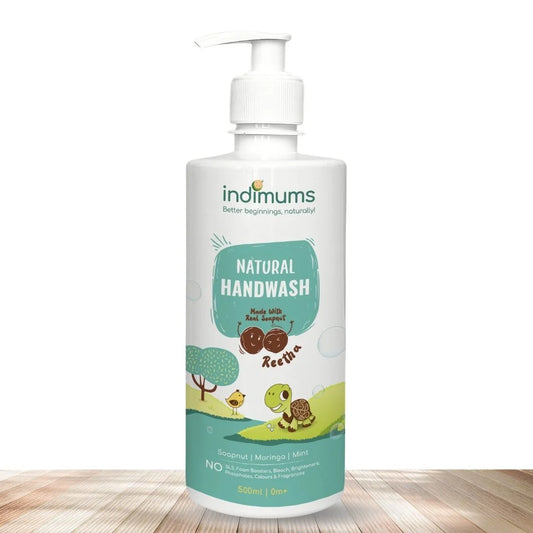
The Indimums Natural Hand Wash For Kids begins with Reetha, which lifts everyday dirt without relying on SLS, and Shikakai, included to keep the after-wash feel less stripped. Moringa leaf extract supports the formula’s repeated-use skin focus, while Mint essential oil gives a clean functional note rather than a synthetic perfume finish.
It is free from SLS, SLES, triclosan, parabens, synthetic fragrance, alcohol, phenoxyethanol and synthetic dyes. We do not think little hands need a dramatic antibacterial story; they need a wash that works calmly and can be used again tomorrow.
Choose daily hand hygiene that cleans small hands without treating them like adult hands.

How It Compares
| Aspect | Antibacterial Hand Washes | Indimums Baby Hand Wash |
|---|---|---|
| Cleansing approach | May lean on strong antibacterial positioning or surfactants | Reetha supports everyday cleansing |
| Repeated-use feel | Can prioritise a sharp or medicinal clean sensation | Shikakai helps keep hands comfortable after repeat washes |
| Added support | May use triclosan or synthetic fragrance | Moringa leaf extract with no triclosan or synthetic fragrance |
| Rinse logic | Scent or foam can be mistaken for effectiveness | Built for a simple, low-residue rinse |
| Philosophy | Stronger can be presented as safer | A routine should work without becoming aggressive |
When Hand Washing Actually Matters
Wash hands after outdoor play, after shared surfaces, before food when fingers have been exploring, after diaper changes and whenever there is visible dirt. Use lukewarm water, a small amount of wash and a full rinse around fingertips. Avoid making every clean-looking hand a reason to wash again.
When dryness persists, use less product and speak with a paediatrician if there are cracks, swelling or signs of infection. Hygiene and skin comfort do not have to compete.
A Better Hand Wash Begins With The Label
This article has separated the everyday hygiene job from an antibacterial marketing promise. The next read helps you look at the categories on a kids’ hand-wash label that are worth noticing before a bottle becomes part of every meal and outing.
Read next: Which Handwash Is Good for Kids? — What the Label Won't Tell You
Conclusion: Clean Hands Do Not Need A Harsh Routine
The safer choice for daily baby handwashing is rarely the bottle with the strongest language. It is the one that removes the day, rinses fully and does not leave your child’s hands feeling repeatedly corrected by the routine. Keep the moments that matter, skip the extra drama and watch how the skin responds. Questioning is also care. A useful hand wash makes hygiene easier to continue, not harder to live with.
FAQs
Q1. Is antibacterial hand wash safe for babies?
A1. An antibacterial claim alone does not make a hand wash better for babies. Repeated use should still rinse easily and avoid unnecessary ingredients that can leave small hands feeling dry or strongly scented.
Q2. Does baby hand wash need triclosan?
A2. No. Triclosan is not necessary for an everyday baby handwashing routine. Thorough washing with a suitable cleanser and water is the useful habit.
Q3. What is the gentlest hand wash for kids?
A3. Choose a formula with a clear cleansing base, low-residue rinsing and no synthetic fragrance or harsh surfactants. A gentle wash should still remove everyday dirt without making repeated washing feel like too much.
Q4. Can I use regular antibacterial soap on my child?
A4. Some adult antibacterial soaps are made for a different level of frequent adult use. If hands become dry or irritated, move to a milder child-focused formula and use lukewarm water.
Q5. How often should a baby wash hands?
A5. Wash after outdoor play, before eating when hands have touched shared surfaces, after diaper-related routines and when visibly dirty. There is no benefit in washing on a strict clock when hands are clean.
Q6. Why are my baby’s hands dry after hand wash?
A6. Hot water, stronger surfactants, too much product or incomplete rinsing can all add to dryness. Reduce the amount first and consider whether the formula is suitable for repeated daily use.