Saumya, Founder | 4 mins
A baby can find the floor, a biscuit, the car door and a sibling’s toy in the space of one afternoon. Then the fingers go straight to the mouth. Hand washing matters, but so does the little feeling left behind afterwards: hands that are clean, not sticky, strongly scented or rubbed dry from a routine that happens many times a day.
Table of Contents
- Why Baby Hand Washing Is Not A Smaller Adult Routine
- How Indimums Baby Hand Wash Handles Repeated Washing
- How It Compares
- When Babies Actually Need Their Hands Washed
- FAQs
Which Baby Hand Wash Is Gentle And Effective For Daily Use?
Quick Answer: A good baby hand wash cleans visible dirt and everyday mess, rinses easily and avoids harsh surfactants, synthetic fragrance and unnecessary antibacterial chemicals. For babies, the best hand wash is one you can use repeatedly without making small hands feel over-washed.
Why Baby Hand Washing Is Not A Smaller Adult Routine
Baby hands face frequent contact and frequent washing. Their skin is thinner and still building the moisture balance that helps hands stay comfortable. Repeated strong cleansing can disrupt that balance, especially around knuckles and fingertips where water, food and rubbing already add up.
The exposure after washing is different too. Babies and toddlers touch their mouths constantly. That is why an everyday hand wash should be assessed for how it rinses, how it feels after several washes and whether its ingredient list is doing more than the routine needs.
How Indimums Baby Hand Wash Handles Repeated Washing
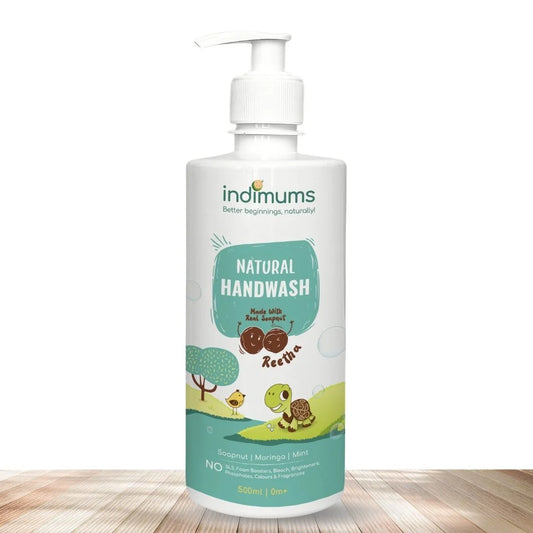
The Indimums Natural Hand Wash For Kids uses Reetha as its cleansing base to lift everyday dirt without relying on SLS. Shikakai is included to help hands feel less stripped after washing, while Moringa leaf extract supports the formula’s repeated-use skin-care focus. Mint essential oil is used in a functional amount for a clean finish, not to make the wash smell aggressively perfumed.
It is formulated without SLS, SLES, triclosan, parabens, synthetic fragrance, alcohol, phenoxyethanol and synthetic dyes. The point is not to make handwashing feel medicinal; it is to make a necessary habit easier to live with.
Choose a hand wash that keeps daily hygiene practical without making little hands pay for it later.

How It Compares
| Aspect | Other Baby Hand Washes | Indimums Baby Hand Wash |
|---|---|---|
| Cleansing base | May use stronger foaming surfactants | Reetha for plant-derived cleansing |
| After-wash feel | Can be designed around a sharp clean feeling | Shikakai helps keep repeated washing less stripping |
| Added support | May rely on a generic antibacterial claim | Moringa leaf extract supports a skin-conscious formula |
| Fragrance | Synthetic scent may linger on hands | Mint essential oil in a functional concentration, no synthetic fragrance |
| Ingredients avoided | May include triclosan, alcohol or dyes | Free from SLS, SLES, triclosan, parabens and synthetic dyes |
When Babies Actually Need Their Hands Washed
Wash after hands are visibly dirty, after outdoor play, before food when fingers have touched shared surfaces, and after toilet or diaper-related routines. Use lukewarm water and take a moment to rinse around fingertips and folds. You do not need a long ritual each time; the useful part is thorough rinsing.
If hands become dry or cracked, shorten the water exposure, avoid hot water and talk to a paediatrician if the skin does not settle. Hygiene works better as a repeatable habit than as a stronger-and-stronger product challenge.
The Label Matters After The Wash Too
This article has focused on why daily baby handwashing needs a mild, easy-rinsing formula. The next read looks more closely at the label categories that can make a hand wash sound reassuring without making it right for repeated little hands.
Read next: Which Handwash Is Good for Kids? — What the Label Won't Tell You
Conclusion: Clean Hands Should Still Feel Like Baby Hands
Hand washing will become part of your family’s rhythm long before your child can manage the tap alone. The goal is not an adult-style, perfume-heavy clean; it is a simple wash that removes the day and leaves the skin ready for the next meal, toy and nap. Questioning is also care. When a product will meet tiny hands many times a day, a quieter formula is a sensible place to begin.
FAQs
Q1. Which hand wash is good for babies in India?
A1. Choose a hand wash with a clear, mild cleansing base, easy rinsing and no harsh antibacterial positioning or heavy synthetic fragrance. A baby’s hands are washed often and then brought close to the mouth, so residue matters.
Q2. Can babies use regular hand soap?
A2. Some regular soaps are made for adult skin and frequent adult washing, not small hands that are still developing their moisture balance. A mild baby-specific hand wash is often a more considered option for repeated use.
Q3. How often should I wash my baby’s hands?
A3. Wash hands after outdoor play, before feeding when hands have touched surfaces, after toileting or diaper changes, and when visibly dirty. Washing by habit every few minutes can dry the skin without adding much benefit.
Q4. Does baby hand wash need antibacterial chemicals?
A4. No. Good handwashing depends on rubbing with a suitable cleanser and rinsing well, not on a harsh antibacterial label alone. Triclosan and strong perfume are not necessary parts of an everyday baby routine.
Q5. Why do my baby’s hands feel dry after washing?
A5. Frequent washing, hot water, strong surfactants or scented residue can all leave hands feeling tight. Use lukewarm water, rinse thoroughly and reassess the cleanser if dryness continues.
Q6. Can toddlers use baby hand wash?
A6. Yes, a gentle hand wash can suit toddlers who wash frequently around meals, play and school routines. Let the child rinse fully and avoid using more product than needed.