Saumya, Founder | 4 mins
Baby clothes touch more skin than almost any product in the house. Vests sit on the chest, nappies touch the waist, towels rub after bath and bedsheets stay against the cheek through sleep. So when a baby has sensitive skin, detergent stops being a laundry decision and becomes a skin-contact decision.
Most parents check the cream, the wash and the oil first. The detergent is often noticed only when clothes smell strong, feel stiff or a rash keeps returning under fabric.
That is why the safest baby laundry detergent is not the one that smells the freshest. It is the one that cleans well and leaves the least unnecessary residue behind.
Table of Contents
- Which baby laundry detergent is safest for sensitive skin?
- Why fabric contact matters for sensitive baby skin
- Why regular detergent can feel too much
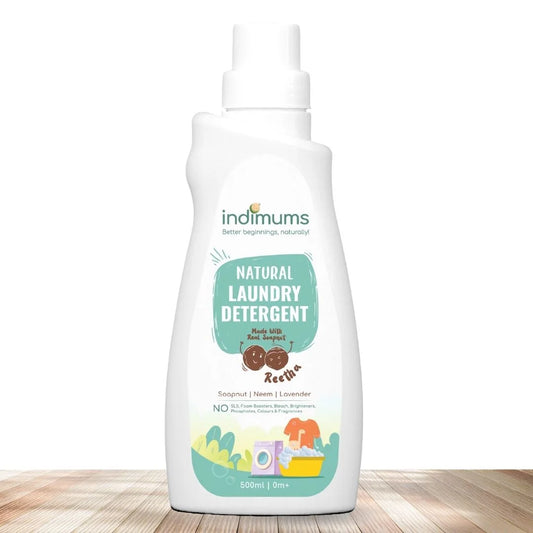
- How Indimums Baby Laundry Detergent supports sensitive skin
- How It Compares
- What to avoid in baby laundry detergent
- What actually helps sensitive baby skin
- FAQs
Which baby laundry detergent is safest for sensitive skin?
Quick Answer: The safest baby laundry detergent for sensitive skin is one that cleans milk, sweat and food residue without synthetic fragrance, optical brighteners, harsh sulphates or heavy softener residue. Baby clothes stay on the skin for hours, so what remains after washing matters as much as what the detergent removes during washing.
Why fabric contact matters for sensitive baby skin
Baby skin is not touched by detergent directly from the bottle, but it is touched by detergent residue through fabric. That contact lasts much longer than a bath. A onesie may sit on the skin for hours. A towel may touch freshly washed skin. A bedsheet may rub against the cheek through sleep.
This is why laundry can quietly affect comfort. A detergent can clean the cloth visibly and still leave behind scent, brightener, surfactant residue or stiffness that sensitive skin does not enjoy.
For a baby with redness-prone or eczema-prone skin, fabric becomes part of the routine. The detergent has to clean the cloth without turning the cloth into another source of irritation.
Why regular detergent can feel too much
Regular detergents are usually built for adult laundry priorities: strong stain removal, long-lasting fragrance, bright-looking clothes and a crisp washed feel. Those priorities make sense for adult shirts and household linen, but baby skin changes the calculation.
Optical brighteners can make clothes appear whiter without actually making them gentler. Synthetic fragrance can stay in fabric to signal freshness. Strong surfactants can help remove stains, but if not rinsed well, residue may remain close to the skin.
The National Eczema Association often recommends fragrance-free laundry care for sensitive and eczema-prone skin. In parent language, that means freshness should come from clean fabric, not a smell that sits on the cloth.
How Indimums Baby Laundry Detergent supports sensitive skin
The Indimums Baby Laundry Detergent was formulated for the way baby clothes actually behave: repeated milk spills, sweat, food marks, diaper leaks and long fabric contact with skin.
Reetha helps lift stains and odours without depending on synthetic surfactant residue. Shikakai works with Reetha to clean fabric while helping it feel naturally softer. Neem seed extract supports fabric hygiene without harsh chemical freshness. Lavender essential oil is used as a mild functional scent, not a synthetic perfume cloud.
We avoid SLS, synthetic fragrance, optical brighteners and parabens because sensitive baby skin does not need fabric to smell louder or look artificially brighter. It needs cloth that comes back clean, soft and uncomplicated.

How It Compares
| Aspect | Other laundry detergent | Indimums approach |
|---|---|---|
| Cleansing base | Often built around stronger synthetic surfactants | Reetha and Shikakai support plant-based fabric cleaning |
| Fragrance | May leave strong scent on baby clothes | Lavender essential oil is used mildly and functionally |
| Key active ingredients | May focus on whiteness, scent or stain aggression | Reetha, Shikakai, Neem seed extract and Lavender essential oil |
| Skin contact | Residue can sit on clothes for hours against baby skin | Designed around cleaner fabric contact for sensitive skin |
| Free-from choices | May include optical brighteners, synthetic fragrance or harsh sulphates | No SLS, no synthetic fragrance, no optical brighteners, no parabens |
| Philosophy | Make clothes smell freshly washed | Make clothes safer to keep close to baby skin |
What to avoid in baby laundry detergent
Avoid strong fragrance as a sign of cleanliness. If a vest smells perfumed after washing, that scent is still sitting in the fabric. For sensitive skin, clean should not need to announce itself.
Avoid optical brighteners when choosing detergent for baby clothes. They can make whites look brighter, but that visual result does not tell you whether the cloth is gentler on skin.
Avoid using too much detergent. Even a mild detergent can leave residue if overdosed or poorly rinsed. More detergent is not better cleaning when the fabric touches baby skin all day.
What actually helps sensitive baby skin
Wash baby clothes separately when possible, especially innerwear, towels and bedding. Use the correct dose, rinse properly and dry clothes fully before folding, particularly in monsoon or humid weather.
Choose a detergent that explains its cleaning base clearly. If your baby has repeated redness where clothes touch, check detergent, fabric softener and fragrance before adding more skincare products.
The aim is simple: clean fabric that supports the skin routine instead of quietly working against it.
When clothes are part of the skin routine
This blog answered why sensitive baby skin needs detergent that thinks beyond stain removal. If your concern is musty odour or monsoon dampness in baby clothes, the next blog explains what is actually happening inside fabric during humid weather.
That matters because smell, dampness and residue can overlap, and solving only one part may leave the fabric uncomfortable.
Read next: Why Baby Clothes Smell Musty in Monsoon Even After Washing — What Is Actually Happening
Soft fabric begins with what you leave behind
You started with a skin question, but the answer was sitting in the laundry basket too. Baby clothes touch sensitive skin for hours, so detergent has to be judged by the residue it avoids, not only the stains it removes. A foundation-first routine keeps the fabric quiet, clean and skin-friendly before reaching for more creams or fixes. What you leave out matters as much as what you put in.
FAQs
Q1. Which baby laundry detergent is safest for sensitive skin?
A1. The safest option is fragrance-free or naturally mild, free from optical brighteners and harsh sulphates, and designed to rinse cleanly from fabric. Sensitive baby skin benefits from clothes that do not hold strong scent or residue after washing.
Q2. Can regular detergent irritate baby skin?
A2. It can, especially if it leaves fragrance, brighteners or surfactant residue in fabric. The issue is repeated contact because baby clothes stay against skin for many hours.
Q3. Should baby clothes be washed separately?
A3. Washing separately is helpful for newborns and sensitive-skin babies because it reduces contact with adult detergent, perfume and fabric softener residue. It also lets you control the dose and rinse more carefully.
Q4. Is fragrance-free detergent better for babies?
A4. For sensitive skin, fragrance-free or very mildly naturally scented detergent is usually a calmer choice. Strong scent on fabric is not proof of cleanliness and can become unnecessary skin contact.
Q5. What ingredients should I avoid in baby laundry detergent?
A5. Avoid synthetic fragrance, optical brighteners, harsh sulphates, parabens and fabric softener chemicals. These may make clothes smell stronger or look brighter, but they do not make fabric gentler for baby skin.
Q6. How much detergent should I use for baby clothes?
A6. Use the recommended dose, not extra. Too much detergent can leave residue even if the product itself is mild, especially in small loads or machines with shorter rinse cycles.