Saumya, Founder | 5 min read
You pick up a baby wash because the bottle says gentle. Beside it, another says natural, and a third says sensitive. Those words explain how a product is presented, but the smaller print helps you decide whether it belongs in your baby's routine.
Table Of Contents
- Why Is Reading Baby Product Labels Important?
- Does This Product Fit The Job You Need It To Do?
- What Should You Check Beyond The Word Gentle?
- How Indimums Makes Ingredient Choices Easier To Understand
- Which Small Details Are Worth Checking Before The First Use?
- Can A Label Tell You Exactly How Your Baby Will Respond?
- FAQs
Why Is Reading Baby Product Labels Important?
Quick Answer: Reading baby product labels helps you check what the product contains, who it is intended for and how to use it. Ingredients, directions, age guidance and expiry information give you a clearer basis for choosing than a front-label promise alone. The aim is a suitable routine, not the shortest ingredient list.
Does This Product Fit The Job You Need It To Do?
Start with the intended use. A rinse-off wash and a leave-on cream have different jobs, even when both mention aloe vera. Directions tell you where the product belongs, how much to use and whether it needs rinsing. Check age guidance rather than assuming every product in the baby aisle is intended for newborns.
The same ingredient does not make two products interchangeable. A bottle cleaner is not a hand wash, and a shampoo is not automatically a suitable leave-on scalp product. Reading the use instructions prevents a familiar ingredient name from doing more work than the formula was designed to do.
What Should You Check Beyond The Word Gentle?
Look for the complete ingredient list, not just a short list of highlighted botanicals. It can help you spot a known trigger, recognise fragrance ingredients and compare a new product with one your baby already tolerates. A long or unfamiliar name is not, by itself, evidence that an ingredient is harsh.
For children with eczema, the American Academy of Dermatology recommends fragrance-free products and notes that unscented is not the same thing. Essential oils can contribute scent too. No synthetic fragrance does not necessarily mean fragrance-free, so read the ingredient list alongside the claim rather than treating those descriptions as interchangeable.
How Indimums Makes Ingredient Choices Easier To Understand
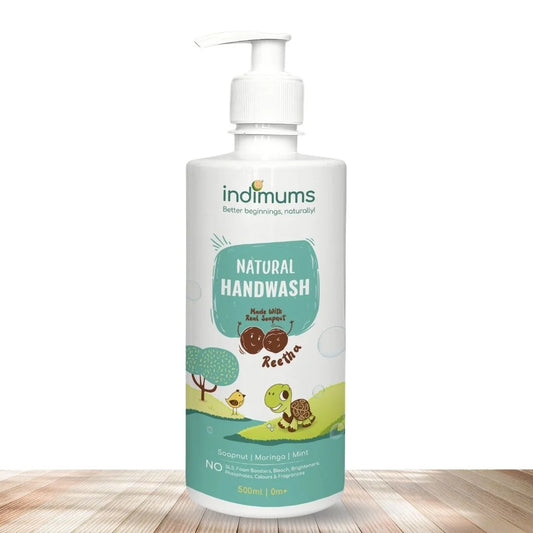
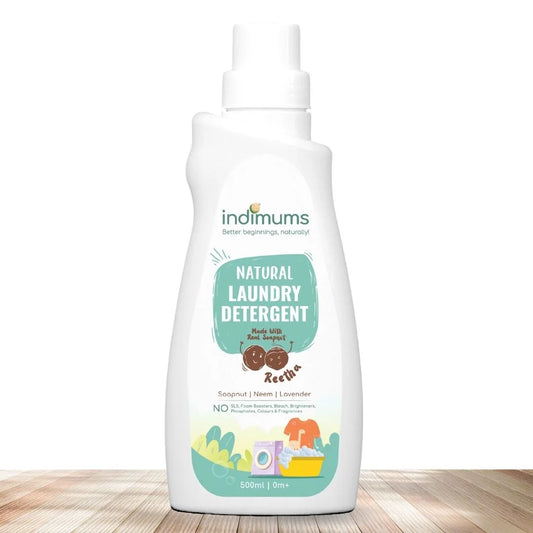
At Indimums, explaining a formula means connecting an ingredient to its job. Reetha belongs in the cleansing conversation; an oil belongs in the discussion about softness and feel. Those explanations are more useful when they sit alongside the complete formula and clear directions, rather than asking one familiar plant to explain the entire product.
Our soapnut story explains why reetha is part of that approach. When choosing a specific product, use its current pack and full ingredient list as the reference. The brand story adds context; the product label tells you what you are actually bringing into the routine.
Which Small Details Are Worth Checking Before The First Use?
Check the expiry or use-before information, storage instructions and whether the packaging is intact. Keep the batch details available, especially if you need to ask the maker about a product. A clear manufacturer or customer-care contact also gives you somewhere to ask about information that is missing or difficult to understand.
Then read the amount, rinsing and frequency directions. More product does not automatically give more benefit, and a wash left on the skin is not being used as intended. These practical details often make a bigger difference to an everyday routine than choosing between two similar front-label slogans.
Can A Label Tell You Exactly How Your Baby Will Respond?
A label helps you make an informed choice, but it cannot predict every individual response. Words such as natural or hypoallergenic do not guarantee that a product will suit every baby. Likewise, an ingredient list alone does not show the finished product's pH, cleansing strength or the details of any testing behind a claim.
Keep the process simple: choose for the actual need, follow the directions and notice how the skin or scalp responds. If a product causes irritation, stop using it rather than assuming that an appealing label outweighs what you can see. Persistent symptoms need assessment, not another round of guesswork with ingredient names.
Want To Understand The Story Behind A Formula?
A label is the starting point; a clear explanation of ingredient choices can help you ask better questions about what is inside.
Read Indimums' approach to traditional knowledge and product testing for the background to that conversation.
Conclusion: Read For Suitability, Not Just Reassurance
The most useful label check connects the ingredients, intended use and directions to your baby's actual needs. It helps you choose a product for a reason you can explain.
You do not need to memorise every cosmetic ingredient. Knowing what to check, and what a label cannot promise, is enough to make the next choice more considered.
FAQs
Q1. What should I read first on a baby product label?
A1. Check the intended use and age guidance first, then the full ingredient list and directions. This helps establish whether the product fits the job before you compare its marketing claims.
Q2. Does natural mean a baby product is automatically gentle?
A2. No. Natural describes an ingredient's origin more than the behaviour of the finished formula. Concentration, the other ingredients and how the product is used also matter.
Q3. Is a shorter ingredient list always better?
A3. No. Some ingredients help preserve, stabilise or balance a formula. A shorter list is not automatically safer or more effective; each ingredient's role and the finished product matter.
Q4. Is unscented the same as fragrance-free?
A4. Not necessarily. An unscented product can contain ingredients used to mask an odour. For fragrance avoidance, look for a fragrance-free claim and review the full ingredient list.
Q5. Should I check the label when buying the same product again?
A5. Yes, a quick check is worthwhile. Formulas, directions and packaging can change, so the current pack is a better reference than an old screenshot or remembered ingredient list.
Q6. What if the full ingredient list is missing online?
A6. Check a clear image of the current pack or ask the manufacturer for the complete list. A short list of hero ingredients does not tell you everything included in the formula.