Saumya, Founder | 5 min read
A grandmother recommends an oil she used on her own children. A bottle promises something new. These are not just two formulas competing on a shelf; they come with different kinds of trust. For many families, the familiar routine has a person and a memory behind it.
Table Of Contents
- Why Do Indian Households Still Trust Homemade Remedies Over Store-Bought Baby Products?
- Why Can A Family Recipe Feel More Reassuring Than A Label?
- How Indimums Connects Familiar Ingredients With Everyday Confidence
- What Does Research Say About How These Choices Are Changing?
- How It Compares
- How Can Parents Keep The Ritual Without Assuming Every Remedy Is Suitable?
- FAQs
Why Do Indian Households Still Trust Homemade Remedies Over Store-Bought Baby Products?
Quick Answer: Many Indian families trust homemade baby-care remedies because they are familiar, passed down by people they trust and feel easier to understand or control. Cost and availability may matter too. That trust is not the same as proof of safety or effectiveness, and households often combine family practices with store-bought products and medical advice.
Why Can A Family Recipe Feel More Reassuring Than A Label?
A relative can show how a preparation is made, explain when it was used and stay beside a new parent while they try the routine. That support can feel more meaningful than a long ingredient list. Familiarity may also make an ingredient seem less uncertain than an unfamiliar cosmetic name.
But personal experience has limits: a baby who tolerated something years ago does not establish how another baby's skin will respond. It helps to separate trust in the caregiver from evidence about the preparation. Respecting the person does not require using every remedy unchanged.
How Indimums Connects Familiar Ingredients With Everyday Confidence
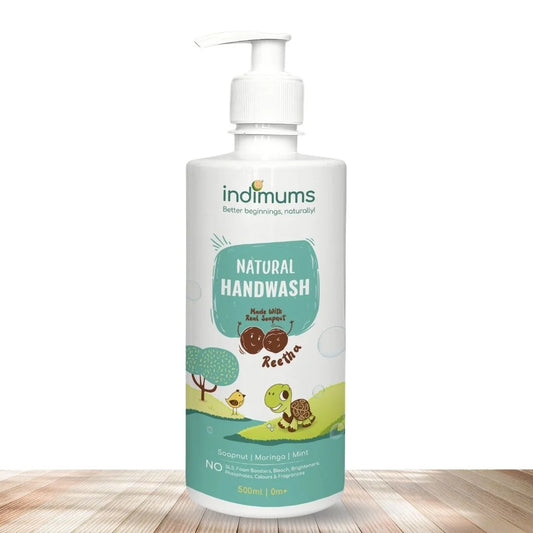
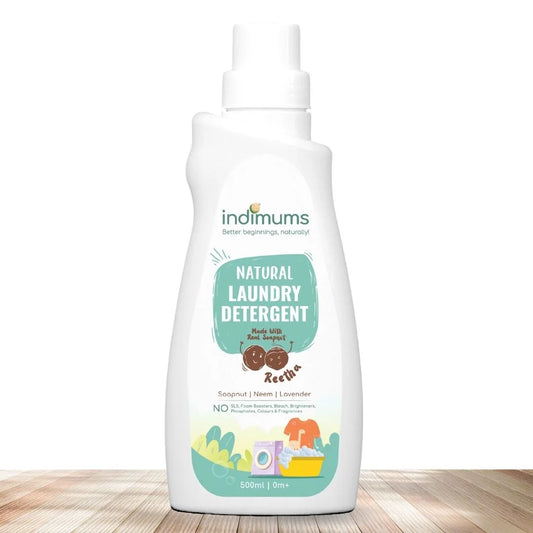
Indimums begins with ingredients many families recognise, including the Reetha traditions behind our cleansing approach. Our soapnut philosophy is about carrying a familiar idea into practical baby-care routines, rather than asking parents to choose between family knowledge and modern formulation.
For parents, that means seeking familiarity alongside clarity: what the product is for, why it is formulated that way and how it fits daily care. Tradition can explain why an ingredient interests us; thoughtful formulation and relevant testing must answer different questions. We want those parts to work together, not compete.
Why we make it this way: See how Indimums began and what we believe baby care should do.
What Does Research Say About How These Choices Are Changing?
A 2024 qualitative study in rural Odisha spoke with mothers and grandmothers about newborn care. It found a mixture of continuing traditions and changing practices, including greater reliance on healthcare advice among mothers. It was not a nationwide survey proving that homemade products are preferred by all Indian parents.
The useful lesson is that family care is not fixed in the past. Knowledge can be shared and updated at the same time. Choosing a different method does not have to mean dismissing the care behind an older one. A calm explanation of what is being changed and why can help.
How It Compares
| Aspect | Homemade Preparation | Store-Bought Formula |
|---|---|---|
| Source Of Trust | Family experience and familiar ingredients | Brand information, formulation and relevant testing |
| What Is Known | Ingredients may be familiar; exact strength can vary | A clear full list can identify ingredients; detail varies by brand |
| Consistency | Recipe and preparation can differ between batches | Manufacturing controls can support consistency |
| Storage | Shelf life cannot be assumed, especially with water | Stability and preservation need an appropriate basis |
| Baby Suitability | Tradition alone does not establish suitability | A baby label alone does not establish suitability |
| Evidence | Personal experience is not a controlled safety test | Ask what was tested, on which formula and for which claim |
| Useful Decision | Keep helpful care rituals while checking the preparation | Choose clarity and suitability rather than broad promises |
How Can Parents Keep The Ritual Without Assuming Every Remedy Is Suitable?
Ask what the preparation is meant to do, how it is made and whether there is evidence relevant to a baby's age and skin. A gentle touch or shared caregiving ritual may be valuable without needing a strong herbal mixture. Homemade water-based preparations also raise questions about contamination and storage.
Store-bought products deserve questions too: natural wording and familiar pictures are not substitutes for a clear formula or suitable use. Avoid putting food, oils or herbal mixtures into a baby's eyes or on the cord stump. For a rash or persistent scalp problem, seek advice rather than treating tradition as a diagnosis.
Want To Understand The Role Of Testing Alongside Tradition?
An ingredient's history and a finished product's testing answer different questions. Understanding both can make the decision less about choosing sides.
Read The Indimums View On Time-Tested And Lab-Tested Care.
Conclusion: Keep The Care, And Keep Asking Useful Questions
Homemade remedies often carry familiarity, support and family memory. Those are meaningful parts of why parents trust them.
The strongest approach is to preserve what is useful while checking the preparation, purpose and baby's response. Neither a family recipe nor a shop label should be beyond thoughtful questions.
FAQs
Q1. Do All Indian Parents Prefer Homemade Remedies?
A1. No. Preferences vary, and many households combine family practices, commercial products and medical guidance.
Q2. Does A Remedy Used For Generations Automatically Suit A Newborn?
A2. No. History of use does not establish safety for every preparation, age or skin condition.
Q3. Are Store-Bought Products Always Better Tested?
A3. Do not assume that from the packaging alone. Ask what testing was done on the finished product and what the findings actually support.
Q4. Can A Family Ritual Be Kept Without The Same Mixture?
A4. Yes. Gentle touch, time together and shared caregiving can remain even when an unsuitable preparation is replaced.
Q5. Why Does Storage Matter For Homemade Preparations?
A5. Some preparations, particularly those containing water, can become contaminated. Familiar ingredients do not provide an automatic shelf life.
Q6. What Should I Do When Family Advice Conflicts With Medical Advice?
A6. Ask the clinician to explain the specific concern and share that explanation respectfully with the family. Do not delay necessary care to test a remedy.