Saumya, Founder | 4 mins
The vest has no stain, the bedsheet smells fresh and the bib looks ready for another feed. Yet your baby's neck feels damp and a seam leaves a red mark. Looking clean answers one question about an item. It does not answer every question about the hours that item spends against skin. That is where fabric, washing and ordinary daily care meet.
Table of Contents
- Why Does All-Day Skin Contact Matter?
- Clean Appearance Is Not The Whole Picture
- How Indimums Approaches Fabric Care
- How It Compares
- Check The Fabric Against The Skin
- Finish The Wash, Rinse And Dry
- Look For A Repeatable Pattern
- FAQs
Why Does All-Day Skin Contact Matter?
Quick Answer: Clothes, bedding and bibs can stay against baby skin for hours, so texture, dampness, friction and washing residues deserve attention alongside visible cleanliness. Contact time is one factor, not proof that a clean-looking item is harmful. Choose and maintain fabrics for comfort in use, rather than judging them only by stains or scent.
Clean Appearance Is Not The Whole Picture
A white garment tells you little about its seams, tightness or how long it stays damp after a feed. A fresh smell tells you that aromatic ingredients may be present, not how thoroughly dirt was removed. Cleanliness and comfort are related checks, but neither can be read from appearance alone. A practical routine looks at both without treating every invisible trace as a threat.
Skin contact depends on the substance, amount, duration and condition of the skin. Longer contact can matter, but a brief exposure to an irritating product can matter too. The headline should not become a rule that all-day fabric always matters more than a wash. It is a reminder to notice the less obvious parts of the baby's day.
The American Academy of Dermatology's eczema guidance highlights clothing and fragrance choices among possible triggers. That does not mean every baby needs a special wardrobe or that detergent causes every rash. It means that when skin is uncomfortable, the things repeatedly touching it are worth reviewing alongside the creams and washes on the shelf.
How Indimums Approaches Fabric Care
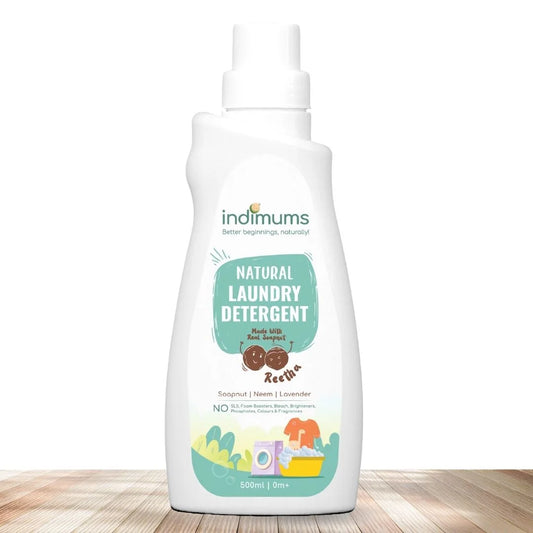
The Indimums Natural Laundry Detergent uses Reetha and Shikakai in its cleansing blend. Reetha provides saponins that help loosen oily dirt during washing. Neem seed extract forms part of the botanical formula, and lavender essential oil gives it a natural scent. The aim is useful cleaning for the clothing, muslins and bedding that become part of a baby's daily surroundings.
We leave out synthetic fragrance and optical brighteners, focusing on washing rather than a heavily perfumed or brighter-looking finish. The formula is naturally scented, not fragrance-free. Dose it for the actual load and complete the rinse and drying stages. A considered detergent choice is one part of comfortable fabric contact; it cannot compensate for an overloaded machine, a damp bib or a garment that rubs.
Choose fabric care that looks beyond stains to the clothes your baby wears throughout the day.

How It Compares
This compares what a detergent can contribute with the other checks that still matter during long fabric contact.
| Aspect | Indimums Laundry Detergent | All-Day Fabric Check |
|---|---|---|
| Cleaning base | Reetha and Shikakai | Use a suitable wash cycle and dose |
| Botanical ingredient | Neem seed extract | Ingredient presence is not a rash-prevention guarantee |
| Scent | Lavender oil; no synthetic fragrance | Choose fragrance-free when sensitivity requires it |
| Appearance | No optical brighteners | Whiteness does not measure skin comfort |
| Rinsing | Follow label directions | Avoid overloading and excess detergent |
| Drying | Detergent cannot finish this step | Store only fully dry items |
| Skin contact | One part of the routine | Check fit, friction and dampness too |
Check The Fabric Against The Skin
Start where discomfort appears. A neck mark may come from damp cloth or a fastening. Waist redness may follow a tight elastic edge. Check the inside of the garment for rough seams and labels rather than only looking at the outside. The cleanest sleepsuit can still be the wrong fit for a baby who has grown since last week.
Damp fabric is a reason to change, even without a stain. Saliva, milk and sweat can collect where cloth rests against the skin. Replace wet bibs and clothing promptly, and dry folds gently. Do not use perfume to make a damp item seem fresh enough for another wear; scent does not remove moisture or the material causing it.
Choose soft, comfortable clothing appropriate to the environment. Babies with eczema may benefit from particular fabric choices advised by their clinician. You do not need to assume that every fibre outside one preferred category is harmful. Watch the actual response, including warmth and rubbing, instead of letting a natural-fabric label make the whole decision.
Finish The Wash, Rinse And Dry
Measure detergent according to load size, water conditions and product directions. Extra detergent does not automatically improve cleanliness and gives the rinse more material to remove. Leave room for clothing to move and use a suitable complete cycle. The useful question is whether the wash is being done properly, not whether the detergent produces a dramatic amount of foam.
Rinse thoroughly and consider an extra rinse when there is a specific reason, such as obvious retained suds or a suspected washing issue. First correct overdosing or overloading. You cannot measure residue by smelling a sleeve, and a faint scent alone does not tell you its safety. For fragrance-reactive skin, select genuinely fragrance-free products rather than relying on scent intensity.
Dry items fully before putting them away. Seams, cuffs and padded areas can remain damp after the main fabric feels dry. Clean the machine as its manufacturer directs and avoid storing wet laundry in a closed bundle. A good drying routine serves skin comfort and freshness more reliably than adding a scented softener to cover a musty result.
Look For A Repeatable Pattern
If redness appears after clothing changes, note the location, garment and products used. Change one likely factor at a time when the skin is otherwise well, so the result is easier to interpret. A rash after laundry day is a clue to investigate, not proof that detergent is the cause. Heat, eczema and friction can overlap.
Persistent, spreading, painful or weeping skin needs assessment. Do not repeatedly rewash everything or buy several new products while an untreated condition continues. The foundation is a calm review of daily contact and appropriate care, not a belief that the home must be made free of every possible exposure.
When A Rash Follows Laundry Day
Daily contact is worth reviewing, but it does not identify the cause of a rash on its own. Our laundry-day article helps separate detergent questions from friction, heat and other explanations before you change the whole routine.
Read next: Baby Skin Rash After Laundry Day — Is It The Detergent?
Conclusion: Judge The Whole Day, Not Just The Wash
The clean vest and fresh sheet are a starting point, not the last word on skin comfort. Check how they fit, whether they stay dry and how they feel after washing. Those observations can reveal a useful adjustment without turning ordinary clothes into something to fear. A good foundation is built from manageable care repeated through the day, alongside help when skin needs it. Questioning is also care. Sometimes the most useful change is not another cream, but a dry bib, a smoother seam or a better-finished rinse.
FAQs
Q1. Can clean clothes still irritate baby skin?
A1. Yes, clean clothing can still rub, fit tightly or stay damp against skin. A washing ingredient may also be relevant for a sensitive baby, but appearance alone cannot identify the cause.
Q2. Does a fresh smell mean baby laundry is clean?
A2. No, scent is not a measure of dirt removal or rinse quality. Check the washing method and make sure clothes are fully dry before use.
Q3. Must baby clothes be fragrance-free?
A3. Fragrance-free is a useful choice when skin is eczema-prone or fragrance-reactive. Other babies may tolerate scented products, but natural scent is still fragrance.
Q4. Do all detergent residues cause rashes?
A4. No, risk depends on the substance, amount and individual skin response. A rash needs a broader assessment rather than an assumption that every trace left after washing is harmful.
Q5. Should I change a damp bib if it looks clean?
A5. Yes, replace a wet bib and gently dry the skin beneath it. Visible staining is not the only reason an item needs changing.
Q6. What should I do if a rash keeps returning under clothes?
A6. Check fit, moisture, seams and any recent product changes, and seek medical advice if it persists. Pain, spreading redness or weeping skin should not be managed by laundry changes alone.