Saumya, Founder | 4 mins
Milk on the shoulder cloth, banana on the bib, dal near the sleeve, and one tiny outfit suddenly has three different stains. Baby clothes get messy in a very ordinary way, but the solution cannot be as aggressive as adult laundry. These clothes return to your baby’s skin for hours, so the stain routine has to think beyond whiteness.
Table of Contents
- What’s the Best Way to Get Milk or Food Stains Out of Baby Clothes?
- Why Milk and Food Stains Hold Onto Baby Fabric
- What Should You Avoid on Baby Clothes Stains?
- What Helps Remove Baby Food and Milk Stains Gently?
- The Indimums Baby Laundry Detergent
- How It Compares
- FAQs
What’s the Best Way to Get Milk or Food Stains Out of Baby Clothes?
Quick Answer: Rinse milk or food stains with cool water first, treat the spot before it dries, wash with a baby-safe detergent and avoid bleach, optical brighteners, strong fragrance and fabric softener. The goal is clean fabric without residue left behind.
Why Milk and Food Stains Hold Onto Baby Fabric
Milk stains contain proteins and fats. Food stains can add starch, oil and natural colour from fruits, vegetables or spices. Hot water can set protein stains faster, which is why a cool rinse before washing often works better than throwing the cloth straight into a hot cycle.
Baby clothing also sits directly against skin for long stretches. Dermatology and eczema-care guidance often recommends fragrance-free laundry for sensitive skin because residue can matter when fabric touches the same skin again and again. In simple terms, stain removal should not leave behind a new problem.
What Should You Avoid on Baby Clothes Stains?
Avoid treating baby stains like adult shirt stains. Strong scent, bleach and brightening agents may make fabric look cleaner, but they are not the same as a baby-conscious wash.
- Hot water first - it can make milk protein harder to lift.
- Optical brighteners - these coat fabric to make it appear whiter.
- Synthetic fragrance - scent can remain in cloth after washing.
- Fabric softener chemicals - they can leave a layer on clothes and reduce natural fabric feel.
- Harsh spot cleaners - many are made for adult laundry, not baby garments worn close to skin.
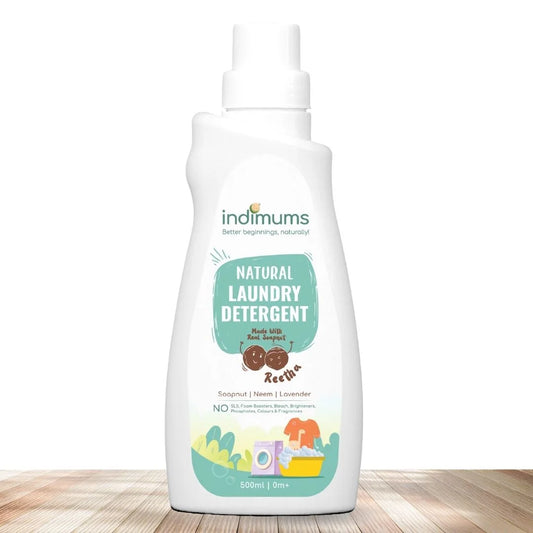
The Indimums Baby Laundry Detergent
The Indimums Baby Laundry Detergent uses Reetha (soapnut) to remove stains without synthetic surfactant residue and Shikakai to support thorough cleaning while maintaining fabric softness naturally. Neem adds natural antimicrobial support for clothing hygiene, lavender essential oil is used functionally rather than as synthetic fragrance, and food-grade potassium sorbate keeps the formula stable.
It does not use synthetic fragrance, optical brighteners, sulphates, parabens, phosphates, fabric softener chemicals or synthetic dyes. That matters because the cleanest baby cloth is not the one that smells the strongest. It is the one that comes back to skin without unnecessary residue.

How It Compares
| Aspect | The Indimums Baby Laundry Detergent | Conventional scented laundry detergents |
|---|---|---|
| Cleansing base | Reetha removes stains without synthetic surfactant residue; Shikakai supports cleaning and fabric softness. | May rely on synthetic surfactants that can leave stronger residue on baby fabric. |
| Fragrance | Lavender essential oil is functional only, not synthetic fragrance. | Synthetic fragrance may remain in clothes after washing. |
| Key active ingredients | Reetha, Shikakai, Neem and food-grade potassium sorbate support cleaning, hygiene and stability. | Often uses perfume, brighteners or softener chemicals to signal freshness. |
| Skin impact | Designed for clothing that touches baby skin for hours. | Residue, scent or coating may be less suitable for sensitive baby skin. |
| Suitable for baby clothes | Avoids optical brighteners, sulphates, parabens, phosphates and synthetic dyes. | May include optical brighteners, strong scent or fabric softener chemicals. |
| Preservatives | Food-grade potassium sorbate keeps the formula stable and safe. | Preservative systems vary and may not be food-grade. |
| Philosophy | Clean the stain while keeping the fabric baby-ready. | Often prioritises strong smell, bright whiteness or adult laundry expectations. |
What Helps Remove Baby Food and Milk Stains Gently?
Start with cool running water from the back of the stain so residue moves out of the fabric instead of deeper into it. If the stain has dried, soak the garment in plain water before washing. For oily food marks, a gentle detergent needs enough contact time to loosen fat without relying on perfume or brighteners.
For Indian homes, speed helps. Milk smell can develop quickly in warm weather, and food stains from turmeric, fruit or dal are easier to manage before they dry fully. A plant-based cleansing system can be useful when it removes residue without leaving a synthetic surfactant feel on the fabric.
Stain Removal Is Only One Part of Laundry Safety
This blog has answered how to handle milk and food stains without turning baby laundry into an aggressive cleaning routine. The next concern is the ingredient list itself, because a detergent can remove stains and still contain things you may not want touching baby skin. Reading that next helps you check the wash, not just the stain.
Read next: What Ingredients Should I Avoid in Baby Laundry Detergent?
Clean Fabric Should Still Feel Like Baby Fabric
You started with a stained bib or shoulder cloth and a very normal question: how do I get this out? The answer begins with cool water, early rinsing and a detergent that cleans without trying to perfume or coat the fabric. Baby laundry works best when it protects the fabric’s next job, sitting softly against your baby’s skin. A clean cloth should not need a strong smell to prove it is clean. If it does not serve your baby it does not go in.
FAQs
Q1. Should I use hot water on milk stains?
A1. Use cool water first because hot water can set milk proteins. After rinsing, wash as per the garment care label.
Q2. How do I remove baby food stains before washing?
A2. Remove extra food gently, rinse from the back of the stain and soak if needed. Then wash with a baby-safe detergent.
Q3. Can I use bleach on baby clothes?
A3. It is better to avoid bleach for regular baby laundry. Choose a gentler wash routine that does not leave harsh residue.
Q4. Why do milk stains smell after washing?
A4. Milk fat and protein can stay trapped if the stain dries or is not rinsed well first. Warm weather can make the smell more noticeable.
Q5. Are optical brighteners okay for baby clothes?
A5. Optical brighteners make fabric look whiter by leaving a coating. For baby clothes, it is better to avoid unnecessary coatings on fabric.
Q6. What detergent is best for stained baby clothes?
A6. Choose a detergent that removes residue without synthetic fragrance, brighteners, sulphates or phosphates. A Reetha and Shikakai based detergent is a gentle option.