Saumya, Founder | 3 mins
A detergent label can look harmless because the clothes come out clean. But baby laundry is different. The fabric touches cheeks, neck folds, elbows and the diaper line all day. That makes every ingredient left behind worth checking.
Table of Contents
- What Ingredients to Avoid in Baby Laundry Soap?
- Which Baby Laundry Detergent Is Safest for Sensitive Skin?
- What Ingredients in Detergents Are Bad for Baby Skin?
- The Indimums Baby Laundry Detergent
- How It Compares
- What Laundry Detergents Should I Avoid for Baby Clothes?
- How to Choose Baby Laundry Detergent for Newborn Clothes?
- FAQs
What ingredients to avoid in baby laundry soap?
Quick Answer: Avoid synthetic fragrance, optical brighteners, sulphates, phosphates, parabens, fabric softener chemicals and synthetic dyes in baby laundry soap. These ingredients may leave scent, coating or unnecessary residue on clothes. For baby skin, the rinse matters as much as the wash.
Which baby laundry detergent is safest for sensitive skin?
Parents usually notice laundry problems when skin looks dry or red where clothes rub. The American Academy of Pediatrics notes that baby skin can react when irritants sit close to the skin. In parent language, that means the routine should solve the real problem without adding residue, fragrance or daily overuse.
Here is what most people miss: the label is not just about stain removal. It is about fabric contact.
What Ingredients in Detergents Are Bad for Baby Skin?
The ingredients most worth checking are not necessarily those with the longest names. They are often performance features designed to make clothes smell stronger, look brighter or feel coated after the wash.
Synthetic fragrance may appear as fragrance, parfum or perfume. Fragrance can remain detectable on washed fabric and is a recognised trigger for eczema or contact dermatitis in some children, which is why dermatologists recommend fragrance-free detergent for sensitive skin.
Optical brighteners, also called fluorescent whitening agents, deposit on fibres and reflect ultraviolet light so fabric looks whiter. They do not remove additional dirt or provide a skin benefit, making them an optional coating rather than a necessary part of baby laundry.
Surfactants lift oils and stains and are necessary in most detergents, but any detergent can remain when too much is used, the machine is overloaded or rinsing is inadequate. The useful question is not whether an ingredient is a sulphate by name alone, but whether the complete formula cleans at the recommended dose and rinses from the specific fabric and water conditions.
Phosphates soften water and improve cleaning but create environmental concerns and are restricted in household laundry detergents in many markets. Their presence is not proof that a garment will retain a harmful film, though a phosphate-free formula can be a reasonable preference.
Fabric softener chemicals deliberately coat fibres to reduce static and change feel. Scented softeners and dryer sheets can contribute to irritation in eczema-prone children, so leaving them out is a simple way to reduce fragrance and unnecessary fabric additives.
The Indimums Baby Laundry Detergent
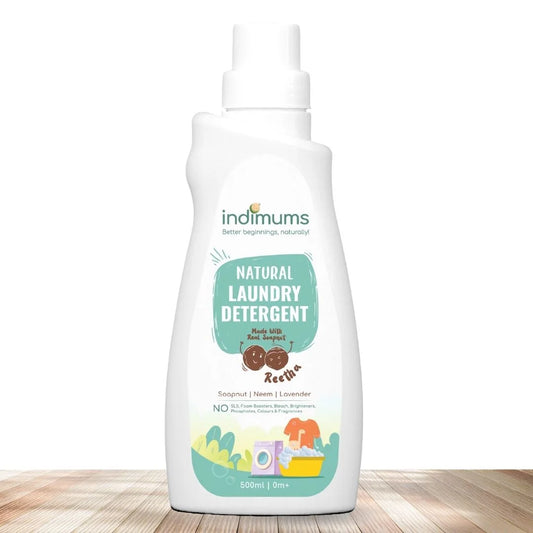
The Indimums Natural Baby Laundry Detergent is built for fabric that stays on skin for hours — not for a quick rinse and done.
Reetha and Shikakai work as the cleansing base, while Neem seed extract supports clothing hygiene. Lavender essential oil provides a mild functional scent, and Potassium sorbate keeps the formula stable.
The formula avoids SLS, synthetic fragrance, optical brighteners and parabens. As with every detergent, use the recommended amount and rinse clothes properly rather than assuming that more product means cleaner fabric.
“The clothes came out clean but did not carry that strong detergent smell anymore.” — Indimums Parent Community
Choose a laundry routine that cleans the stain without making scent the proof of cleanliness.

How It Compares
| Aspect | Indimums Baby Laundry Detergent | Typical Baby Laundry Detergent |
|---|---|---|
| Cleansing or moisturising base | Reetha and Shikakai clean fabric without synthetic surfactant residue | Synthetic surfactant-heavy base |
| Fragrance | Lavender essential oil is functional, not perfume-led | Synthetic fragrance can remain in fabric |
| Key active ingredients | Reetha, Shikakai, Neem and potassium sorbate named clearly | Actives often hidden behind generic cleaning terms |
| Skin or scalp impact | Made to reduce residue against baby skin | May leave scent or softener coating |
| Suitable for sensitive or newborn skin | Useful for newborn and sensitive skin laundry routines | Often made for family laundry first |
| Preservatives | Potassium sorbate keeps formula stable | May use phosphates or brightener systems |
| Philosophy | Clean clothes should support skin, not just smell fresh | Focuses on fragrance, foam and visible brightness |
What Laundry Detergents Should I Avoid for Baby Clothes?
Avoid choosing by the words gentle, herbal or family alone. Those claims do not tell you whether a formula contains fragrance, dyes, optical brighteners or built-in softener.
- Heavily fragranced detergents: claims such as long-lasting fragrance indicate that scent on fabric is part of the intended result
- Detergents with brightening claims: check the ingredient information or manufacturer disclosure for optical brighteners if you prefer to avoid them
- Two-in-one detergent and softener products: these deliberately leave conditioning ingredients on fibres and may add fragrance
- Unverified family detergents: an adult detergent may work perfectly well for many babies, but sensitive or eczema-prone skin warrants a fragrance-free, dye-free choice
- Any detergent used at an excessive dose: hard water can complicate washing, but adding extra product without following local dosing guidance can make rinsing worse rather than better
In Indian homes, water hardness, machine type, load size and drying conditions all affect the final fabric. Use the dose recommended for your water and washer, avoid overloading and add an extra rinse when residue remains or a clinician recommends it.
How to choose baby laundry detergent for newborn clothes?
- Reetha: cleans stains without synthetic surfactant residue
- Shikakai: supports cleaning and fabric softness
- Neem: supports clothing hygiene
- Fragrance-free or functional essential oil only: keeps scent low
- Food-grade preservative: keeps the formula stable
- Easy-rinse formula: matters for clothes touching baby skin
If the detergent smell follows the clothes into the cupboard, it may be too much. For Reetha-based routines, the soapnut story matters because it explains why mild cleansing does not need harsh foam.
Ingredient checks make laundry choices simpler
This blog answered what to avoid on a detergent label. The next question is why baby detergent differs from regular detergent. Reading that next helps you decide what belongs in your family wash routine.
Read next: Difference between baby laundry detergent and regular?
FAQs
Q1. What ingredients should I avoid when buying laundry detergent for a baby?
A1. Prioritise a fragrance-free and dye-free detergent, especially if your baby has eczema or sensitive skin. Also check for optical brighteners and built-in fabric softener if you want to minimise unnecessary fabric coatings, and always use the recommended dose so detergent can rinse properly.
Q2. What do paediatricians recommend avoiding in baby laundry detergent ingredients?
A2. Dermatology guidance for eczema-prone children consistently recommends fragrance-free and dye-free laundry detergent. Scented fabric softeners and dryer sheets may also contribute to irritation, while adequate water and the correct detergent amount help reduce leftover product.
Q3. What are the most concerning laundry detergent ingredients for baby skin in India?
A3. Synthetic fragrance and dyes are practical first checks because warm weather, sweat and long fabric contact may make irritation more noticeable in a sensitive baby. Hard water can also reduce rinsing performance, so correct dosing, a complete rinse and avoiding overloading the machine matter alongside the ingredient list.
Q4. Are optical brighteners harmful for baby clothes?
A4. Optical brighteners deposit fluorescent compounds on fibres to make fabric appear whiter, but that does not mean they are proven to harm every baby. They provide no cleaning or skin benefit, so parents who want a simpler sensitive-skin routine can reasonably choose a detergent without them.
Q5. Does Indian heat make fragrance on clothes feel stronger?
A5. Heat and sweat can make scented fabric more noticeable and can aggravate eczema or irritation in some children. If redness appears where clothing sits closely, try fragrance-free detergent, use the recommended dose and rinse thoroughly while discussing persistent symptoms with a dermatologist.
Q6. Is more detergent better for dirty baby clothes?
A6. No. Extra detergent can be harder to rinse and may leave clothes stiff or scented without improving stain removal. Pre-treat the stain, follow the machine and detergent dosing instructions, avoid overloading and use an additional rinse when clinically advised or when residue remains.
The quietest detergent often serves skin best
You started with a clean pile of baby clothes and a label that did not explain enough. The real question is not only whether stains are gone. It is what remains in the fabric afterward. A better laundry routine protects the foundation first by reducing residue, fragrance and coatings against the skin. What you leave out matters as much as what you put in. Clothes can be clean without smelling loud. That is often the calmer choice.