Saumya, Founder | 4 mins
You wash your child's hands before food, after the toilet and after messy play. The habit is working, but the fingers begin to feel rough and the next wash brings complaints. That is not a reason to give up hygiene. It is a reason to ask whether the routine is caring for the skin that has to repeat it tomorrow.
Table of Contents
- Why Should Hand Washing Protect The Skin Barrier?
- What Repeated Washing Changes
- How Indimums Fits Repeated Washing
- How It Compares
- Keep The Wash Effective
- Support Skin Between Washes
- When Tightness Becomes A Pattern
- FAQs
Why Should Hand Washing Protect The Skin Barrier?
Quick Answer: Handwashing needs to remove dirt and germs while remaining comfortable enough to repeat. Frequent washing can contribute to dryness, so a mild cleanser, complete rinsing, gentle drying and suitable moisturising help protect the skin alongside hygiene. Clean hands do not need to feel tight, sting or smell strongly perfumed.
What Repeated Washing Changes
The skin barrier is the outer layer that helps limit water loss and contact with irritants. Cleansing, water exposure and towel friction all affect how hands feel. One wash may seem harmless while a repeated pattern gradually leaves dryness. The useful question is not only whether the wash cleaned, but how the hands tolerate the whole day's routine.
Comfort and hygiene are partners, not competing goals. Sore fingers can make a child resist washing or rush the rinse. Choosing a tolerable routine supports the habit itself. It does not mean replacing necessary handwashing with a quick wipe, or leaving dirt behind to preserve the skin's natural oils.
The American Academy of Dermatology recommends moisturising after handwashing to help manage dryness. The CDC also notes that consumer antibacterial soaps have not shown added health benefit over plain soap in everyday use. The practical aim is a proper wash that can be repeated, not the most aggressive formula available.
How Indimums Fits Repeated Washing
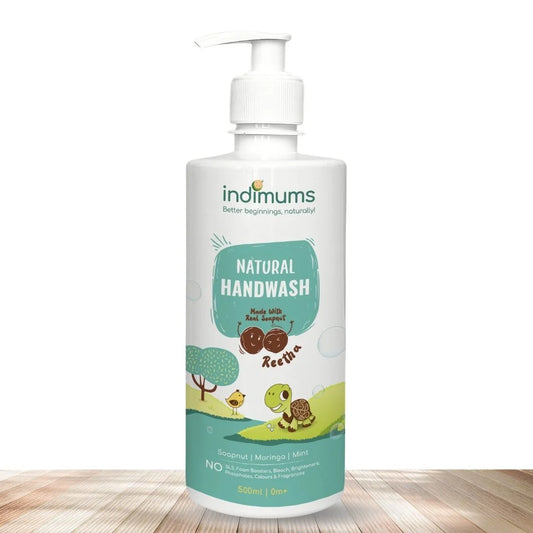
The Indimums Natural Handwash uses Reetha and Shikakai in its cleansing blend. Reetha's saponins help water lift everyday dirt. Moringa leaf extract forms part of the botanical formulation, and mint essential oil gives a natural scent. We focus on the ordinary moments when small hands need a proper wash, rather than treating a stronger smell as proof of cleanliness.
The formula is made without synthetic fragrance, although mint oil means it is not fragrance-free. Measure a manageable amount, cover the hands thoroughly and rinse well. Our aim is to make daily hygiene easier to live with, alongside careful drying and moisturising where needed. A hand wash has a useful role in that routine; it should not be expected to do the job of a leave-on moisturiser too.
Make daily handwashing a habit that cleans thoroughly and stays comfortable to repeat.

How It Compares
This compares the role of a mild wash with a stronger-is-better approach, not laboratory germ-kill results for individual products.
| Aspect | Indimums Handwash Approach | What Still Needs Checking |
|---|---|---|
| Cleansing base | Reetha and Shikakai blend | Effective coverage and complete rinsing |
| Botanical ingredient | Moringa leaf extract | No germ-kill rate inferred from its presence |
| Fragrance | Mint essential oil; no synthetic fragrance | Fragrance-sensitive skin may need fragrance-free |
| Daily use | Part of repeated hygiene | Avoid unnecessary washing beyond the actual need |
| Moisture care | Rinse-off cleansing step | A leave-on moisturiser may still be useful |
| Success measure | Clean hands and a manageable routine | Stinging or tightness is not proof of performance |
| Skin concerns | Observe individual tolerance | Persistent cracks or rash may need treatment |
Keep The Wash Effective
Wet the hands with clean running water, apply soap and work it over palms, backs, between fingers and around nails. Follow the CDC's advice to scrub for at least twenty seconds before rinsing. Help young children reach the sink safely and supervise throughout. Very hot water is not needed to make an everyday hand wash worthwhile.
The rinse is part of the cleaning, not an optional finish. Give fingers and creases enough attention to remove the wash. A child hurrying away from a slippery tap may leave product behind even with a well-chosen formula. Use a clean towel and pat or dry gently rather than repeatedly rubbing already sore knuckles.
Support Skin Between Washes
A suitable fragrance-free moisturiser can help when hands become dry. Apply as directed after washing, once the hands are clean, rather than using cream over dirt. Choose a product appropriate for the child's age and needs, and avoid leaving a thick excess that is immediately transferred to food or rubbed into the eyes.
Look at the whole formula rather than a single reassuring word. 'Natural', 'baby' and 'hypoallergenic' do not mean that no child can react. Fragrance-free is a useful choice for eczema-prone or fragrance-sensitive skin. Essential oils still contribute fragrance, so a botanical scent is not a substitute when complete fragrance avoidance is needed.
When Tightness Becomes A Pattern
Persistent roughness, stinging, cracks or itching deserve a review of cleanser, temperature, frequency and drying. Change one element at a time where practical. A child who says the wash hurts is giving useful information; discomfort should not be explained away as evidence that germs are being removed.
Seek advice if skin is painful, bleeding, weeping or not improving, or if a known eczema plan is not controlling it. Do not stop essential hygiene, but ask how to make it tolerable while the skin heals. Hand care works best when the cleaning habit and the skin condition are addressed together.
Does The Age Label Decide Mildness?
A child-friendly routine starts with the formula and how it is used, not the bottle's age label alone. Our baby-versus-adult hand-wash comparison explains which differences are worth checking when several family members share the sink.
Read next: Baby Hand Wash Vs Adult Hand Wash — Why The Formula Difference Matters
Conclusion: Care For The Hands That Keep Washing
Those rough fingers do not need a choice between clean hands and comfortable skin. They need an effective wash, a complete rinse and care that makes the next wash manageable. Small adjustments to water, drying and moisturising can support the habit without turning it into a complicated ritual. Pay attention when the skin feels different and get help when symptoms persist. The foundation is a routine that works repeatedly, not a stronger sensation at the sink. What you leave out matters as much as what you put in.
FAQs
Q1. Does handwashing damage the skin barrier?
A1. Frequent washing can contribute to dryness, especially with irritating formulas, hot water or rough drying. Necessary washing should continue, with a gentler method and suitable moisturising where needed.
Q2. Do children need antibacterial hand wash every day?
A2. Ordinary soap and water are appropriate for routine household handwashing. An antibacterial label is not evidence that the wash is a better daily choice.
Q3. Is tight skin after washing a sign of cleanliness?
A3. No, tightness can indicate dryness or poor tolerance of the routine. Judge cleanliness by proper washing and rinsing, not discomfort.
Q4. Should I moisturise my child's hands after washing?
A4. A suitable moisturiser can help if the skin is dry, following age-appropriate directions. Apply to clean hands and avoid excessive product near food, eyes or the mouth.
Q5. Is natural hand wash always fragrance-free?
A5. No, essential oils can give a natural hand wash fragrance. Check the full ingredients when fragrance avoidance is part of your child's care.
Q6. What if my child's hands crack despite using mild soap?
A6. Review the whole routine and seek advice for persistent or painful cracking. A skin condition may need treatment alongside continued gentle hygiene.