Saumya, Founder | 5 min read
Little hands move between food, toys, fabric and the mouth all day. Keeping them soft does not mean keeping them untouched. It means making the cleaning and care around those ordinary moments less drying.
Table Of Contents
- 5 Tips To Keep Your Baby's Hands Soft Through The Day
- 1. Wash At Useful Moments, Not After Every Touch
- 2. Choose A Cleanser The Skin Tolerates
- 3. Pat Dry And Give Moisture Back Promptly
- 4. Make Between-Wash Wiping Less Irritating
- 5. Notice A Pattern Before Changing Everything
- Why Indimums Keeps Everyday Hand Care Practical
- FAQs
5 Tips To Keep Your Baby's Hands Soft Through The Day
Quick Answer: Use a mild cleanser, rinse well, dry without rubbing, moisturise dry areas and limit repeated saliva or product irritation. These five habits support softer hands without dropping necessary hygiene. Persistent redness or cracking needs attention beyond a softer-feeling wash.
1. Wash At Useful Moments, Not After Every Touch
Clean hands before meals and after visibly dirty or contaminated contact. Help your baby through the wash, including the palms and between fingers. There is no need to turn every touch of a clean toy into another full washing cycle.
Keep the distinction between hygiene and worry clear. Do the necessary wash properly, rather than adding many rushed washes. Use comfortable water and avoid leaving hands soaking while you prepare other things.
2. Choose A Cleanser The Skin Tolerates
Use a small amount of a mild, age-appropriate cleanser and rinse it away thoroughly. More product is not a shortcut to cleaner hands. If stinging or redness repeatedly follows a particular wash, stop using it and review the routine.
For dry or sensitive skin, fragrance-free is a useful starting point. A botanical smell is still scent, and a big lather is not proof of better hygiene. Judge the result by clean, comfortable skin, not the strength of the smell left behind.
3. Pat Dry And Give Moisture Back Promptly
Use a soft clean towel, paying attention to spaces between the fingers. Pat rather than rub. On dry skin, smooth on a small amount of a suitable fragrance-free cream or ointment after washing, without leaving a thick excess on the fingertips.
The American Academy of Dermatology recommends moisturising after handwashing to reduce dryness. Choose a product suitable for your baby's age, and supervise application. The aim is a light, comfortable layer, not hands coated so heavily that everything feels slippery.
4. Make Between-Wash Wiping Less Irritating
Pat away excess saliva and gently lift off food with a soft damp cloth when appropriate. Repeated rough wiping can irritate the same patch even if the cleanser itself is well tolerated. Replace damp cuffs that keep the wrists wet.
Avoid using fragranced household wipes, perfume or undiluted essential oils on the hands. If a surface is simply wet with clean water, a gentle dry is enough; it does not automatically call for another dose of cleanser.
5. Notice A Pattern Before Changing Everything
Keep track if roughness appears after a new product or along a wet cuff. Make one sensible change at a time, so it is easier to see what helps. Keep moisturising dry areas rather than waiting for them to become uncomfortable.
Persistent itching, painful cracks or spreading redness should be assessed. Do not keep testing products on broken skin. Fever, swelling or discharge needs prompt medical advice rather than another experiment with hand-care products.
Why Indimums Keeps Everyday Hand Care Practical
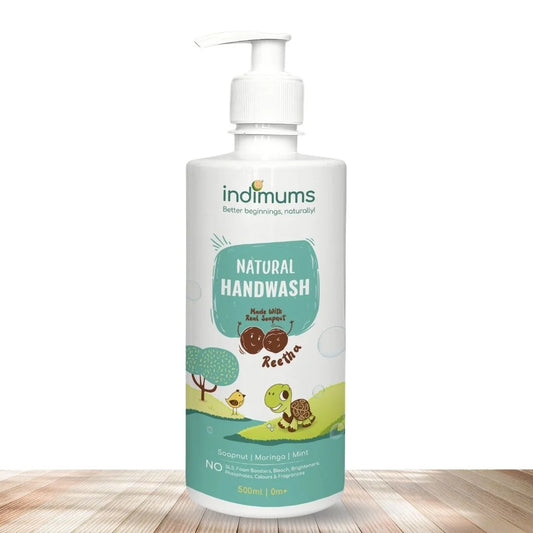
We want Indimums Natural Hand Wash to fit the small, repeated moments of family life: before a snack, after play and when little hands get messy. The Reetha-based approach puts everyday cleaning at the centre, with comfort as part of the experience.
For parents, our philosophy means not treating a stronger smell or more foam as a better wash. A repeatable, comfortable routine is the benefit we work towards. When skin needs extra moisture, that care belongs alongside washing rather than being replaced by it.

Why we make it this way: See how Indimums began and what we believe baby care should do.
Wondering When Handwashing Should Begin?
The useful moments depend on what your baby is doing and touching, not simply a birthday. A clear routine is easier to keep than washing by the clock.
Read When To Start Washing Your Baby's Hands.
Conclusion: Make Softness Part Of The Daily Routine
Gentle washing, careful drying and timely moisture work together. No single step needs to be complicated to make the routine more comfortable.
Keep the habits consistent and seek advice if irritation persists. The goal is hands that are clean when they need to be and comfortable between washes.
FAQs
Q1. How Often Should I Moisturise My Baby's Hands?
A1. Apply a suitable product after washing when the skin is dry, and again as needed. Use a small amount rather than leaving excess on fingers.
Q2. Can I Use My Own Perfumed Hand Cream?
A2. Choose an age-appropriate fragrance-free moisturiser instead, especially if the skin is dry or sensitive.
Q3. Should I Use Sanitiser Every Time Instead Of Washing?
A3. No. Soap and water are preferable when available, especially for visibly dirty hands. Keep sanitiser away from babies' mouths and never allow unsupervised use.
Q4. Should Hands Still Be Damp When I Apply Moisturiser?
A4. After gentle drying, a little remaining skin moisture can help. Do not leave water trapped between the fingers.
Q5. Are Wet Sleeves Relevant To Rough Hands?
A5. Yes. Damp cuffs can keep rubbing and wetting the wrist area. Change them and dry the skin gently.
Q6. Can These Tips Treat Hand Eczema?
A6. They support gentle skin care but do not replace a diagnosis or prescribed eczema treatment. Persistent inflammation needs medical advice.