Saumya, Founder | 4 mins
One day your baby's hands are mostly tucked inside mittens. Then suddenly they are on the mat, on your phone, on a biscuit, and back in the mouth before you can react. That is usually when handwashing stops feeling like an adult habit and becomes part of baby care.
Table of Contents
- When should I start washing my baby's hands?
- Why handwashing begins before school or walking
- Why baby hands become a different hygiene route
- How Indimums Hand Wash supports frequent baby hand cleaning
- How It Compares
- What actually helps build a handwashing routine
- FAQs
When should I start washing my baby's hands?
Quick Answer: Start washing your baby's hands when hands begin touching mouths, food, toys, floors or shared surfaces often. It is not only an age milestone. It is an exposure milestone. Use gentle washing when needed, not harsh soap every time a finger looks slightly messy.
Why handwashing begins before school or walking
Parents often think handwashing starts when a child begins eating independently or going to preschool. In reality, baby hands become busy much earlier. Rolling, crawling, teething and finger foods all bring hands closer to the mouth.
That does not mean scrubbing tiny hands all day. It means noticing the moments that matter: before food, after outdoor play, after touching shared surfaces, and when dirt is visible.
Why baby hands become a different hygiene route
Hand-to-mouth contact changes everything. Babies explore with their hands and mouths at the same time. A surface that adults only touch may become something a baby touches and tastes within seconds.
CDC guidance notes that handwashing with soap and water helps remove germs, dirt and chemicals, and that parents help children build the habit early. Parent translation: washing is not about making hands sterile. It is about reducing what gets carried from surface to mouth.
Repeated washing can also dry the skin. Baby hand skin is still delicate, so the product matters more once handwashing becomes frequent. The right routine cleans enough without turning every wash into a drying event.
How Indimums Hand Wash supports frequent baby hand cleaning
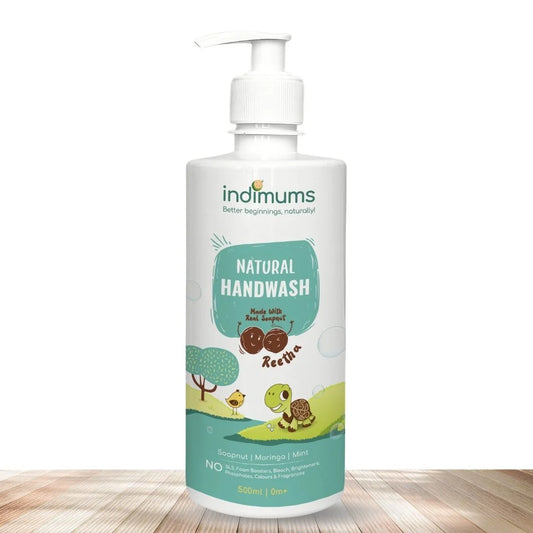
The Indimums Natural Handwash is made for the stage where hands are washed repeatedly through the day. Reetha helps remove dirt without stripping skin's natural oils, while Shikakai leaves hands feeling softer after washing. Moringa Leaf Extract supports skin comfort through repeated exposure, and Mint Essential Oil gives a clean functional feel without relying on synthetic fragrance.
The formula avoids SLS, SLES, triclosan, synthetic fragrance and drying alcohol-led cleansing. That matters because baby handwashing is not a one-time bath event. It can happen after snacks, play, crawling and outings.
Make handwashing easier with a baby-friendly hand wash built for repeated daily use.

How It Compares
| Aspect | Other hand wash | Indimums approach |
|---|---|---|
| Base | Strong soap or sulphate-led cleansing | Reetha and shikakai clean without harsh stripping |
| Fragrance | Strong scent may be used to signal hygiene | Mint essential oil in a functional concentration |
| Key active ingredients | Often antibacterial claim-led | Reetha, shikakai, moringa and mint support daily hand hygiene |
| Skin impact | Can dry hands with frequent use | Made for repeated washing with better comfort |
| Sensitive baby use | May be adult hand soap in family use | Designed for baby and kid handwashing routines |
| Free-from choices | May include triclosan, sulphates or synthetic fragrance | No harsh sulphates, triclosan or synthetic fragrance |
| Philosophy | Make hands smell clean | Clean hands without making skin pay for it |
What actually helps build a handwashing routine
Start with moments, not age. Wash before meals, after outdoor floor play, after touching shoes or pets, and whenever hands are visibly dirty. Use a small amount, rinse well between fingers and dry gently.
On lighter days, wiping may be enough. On food, floor and mouth-heavy days, proper washing makes sense. The goal is not anxiety around germs. It is a calm routine that fits how babies actually explore.
When choosing the hand wash becomes the next question
This blog has answered when handwashing should begin and which moments matter most. The next useful question is what kind of hand wash suits children once washing becomes frequent. Read next: Which Handwash Is Good for Kids? — What the Label Won't Tell You.
Clean hands should not mean dry hands
You began with tiny fingers going everywhere and then straight to the mouth. That is the real handwashing milestone, not a birthday on the calendar. A good routine cleans at the moments that matter, uses a formula gentle enough to repeat, and leaves the skin comfortable afterwards. Hygiene works best when it becomes calm, predictable and kind to the skin. Questioning is also care.
FAQs
Q1. When should I start washing my baby's hands?
A1. Start when your baby's hands regularly touch mouths, food, toys, floors or shared surfaces. For many families, that begins before the baby can walk.
Q2. Do newborn hands need washing?
A2. Newborn hands usually need gentle wiping more than frequent soap washing. Use water or a soft damp cloth unless there is visible dirt, spit-up or contact with something unclean.
Q3. Can I use regular hand soap for babies?
A3. Regular hand soap may be too drying if used repeatedly on baby skin. A baby-specific hand wash is better when washing becomes a daily routine.
Q4. How often should I wash baby hands?
A4. Wash after outdoor play, before eating, after diaper changes if hands were involved, and when hands are visibly dirty. Avoid washing by the clock if the skin is becoming dry.
Q5. Is sanitiser safe for baby hands?
A5. Soap and water are preferred when possible. If sanitiser is used around young children, it should be adult-controlled and kept away from mouths and eyes.
Q6. What should a baby hand wash avoid?
A6. Avoid harsh sulphates, synthetic fragrance, triclosan and drying alcohol-led formulas for routine handwashing. Baby hands need cleansing without repeated moisture loss.