Saumya, Founder | 4 min read
You wash away food, dirt and whatever those exploring fingers have found. Yet the hands feel rough again before the next feed. Cleanliness and softness are different outcomes, and washing alone does not supply everything dry skin needs.
Table Of Contents
- Why Do A Baby's Hands Feel Rough Even With Frequent Washing?
- Why Can Clean Hands Still Feel Dry?
- How Indimums Approaches A Habit That Happens Repeatedly
- What Happens Between Washes Can Keep Roughness Going?
- When Is It More Than Ordinary Dryness?
- FAQs
Why Do A Baby's Hands Feel Rough Even With Frequent Washing?
Quick Answer: A baby's hands can feel rough because repeated washing removes some protective skin oils while water, cleanser and rubbing add irritation. Saliva from hand-sucking can keep the cycle going. Necessary handwashing should continue, but gentler cleansing, careful drying and suitable moisturising can help the skin stay comfortable.
Why Can Clean Hands Still Feel Dry?
The outer skin layer needs water and lipids to remain flexible. Repeated wetting, cleansing and drying can disturb that balance, especially when the water is hot or the cleanser is more than the skin tolerates. Roughness is not evidence that the hands need another scrub.
The Indian Academy of Pediatrics' skin-care guidance describes an ideal infant cleanser as mild and non-irritating, with attention to preserving the skin barrier. Cleaning should remove the mess without making tightness the sign that the job is finished. The amount used and the way you rinse matter too.
How Indimums Approaches A Habit That Happens Repeatedly
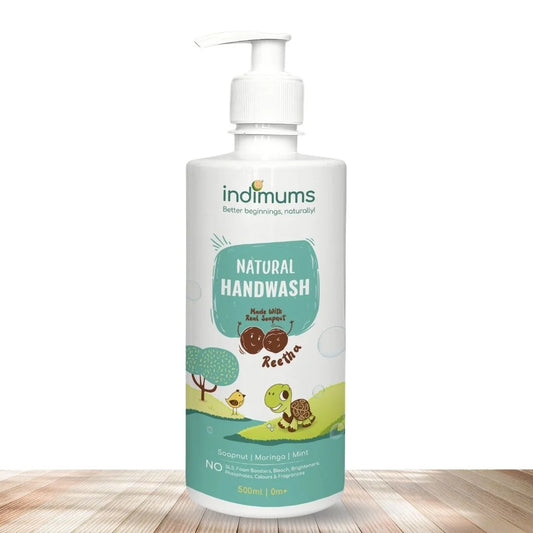
The idea behind Indimums Natural Hand Wash is simple: hand hygiene should fit comfortably into daily family life. The Reetha-based formula is designed around everyday cleaning, with the aim of making repeated washes easier on little hands rather than turning each wash into a strong-smelling ritual.
For parents, the benefit we work towards is a routine that remains practical through meals and play, with clean hands that feel comfortable afterwards. We see washing as one part of skin care, not a replacement for moisture when hands are dry. Softness between washes matters as much as the moment at the sink.

Why we make it this way: See how Indimums began and what we believe baby care should do.
What Happens Between Washes Can Keep Roughness Going?
Food left around fingers, frequent hand-sucking and wiping with a rough towel can repeatedly wet or rub the same areas. A baby may also have an underlying tendency to dry skin or eczema. That is why changing the hand wash alone does not always resolve the problem.
Gently remove visible mess, dry between fingers and use a small amount of a suitable fragrance-free moisturiser when needed. Avoid leaving a thick layer pooled on fingertips that go straight into the mouth. Do not add essential oils or household remedies to make the product feel more nourishing.
When Is It More Than Ordinary Dryness?
Look beyond texture if the skin becomes persistently red, itchy, cracked or painful. A recurring pattern after a product is useful information, but does not prove an allergy on its own. Note what touched the hands and how quickly the discomfort followed.
If simple changes do not help, ask your paediatrician to check for eczema or contact irritation. Oozing, spreading redness, swelling or fever needs prompt advice. Keep useful hygiene; change the parts of the routine that leave skin uncomfortable.
Want To Review The Hand Wash Itself?
A product that repeatedly leaves hands sore deserves a closer look, even if the label says gentle. Compare the response after washing rather than judging the amount of foam.
Read About Dry And Cracked Hands After Washing.
Conclusion: Cleanliness Does Not Replace Skin Care
Rough hands often need less friction and better moisture support, not more frequent washing. Saliva and repeated wiping can be part of the explanation too.
Keep cleaning at appropriate moments, make each wash gentle and address persistent irritation early. Comfortable hands are the goal throughout the day.
FAQs
Q1. Does Roughness Mean My Baby's Hands Are Still Dirty?
A1. No. Rough texture can reflect dryness or irritation. More scrubbing may make it worse.
Q2. Should I Stop Washing My Baby's Hands?
A2. No. Continue necessary hygiene, especially before eating and after dirty contact. Avoid repeatedly washing already-clean hands without a reason.
Q3. Can Hot Water Make Hands Feel Rougher?
A3. Yes. Use comfortable lukewarm water rather than hot water, and avoid prolonged soaking.
Q4. Can Hand-Sucking Contribute To Dry Skin?
A4. Repeated saliva contact and drying can irritate skin. Gently pat away excess moisture rather than repeatedly rubbing the hands.
Q5. Does A Moisturising Hand Wash Replace Cream?
A5. Not necessarily. A rinse-off wash does not provide the same lasting moisture support as an appropriate leave-on moisturiser.
Q6. When Should A Doctor Check Rough Hands?
A6. Ask for advice for persistent itching, redness, cracks or pain. Seek help promptly for spreading inflammation, oozing, swelling or fever.