Saumya, Founder | 4 mins
You start washing hands more often once crawling, snacks and outdoor play begin. Then the tiny knuckles look rough, the fingers feel dry, and suddenly hygiene feels like it is costing the skin something. The answer is not to stop washing. It is to check what the wash is doing.
Table of Contents
- Baby hands dry and cracked after washing — is the hand wash too strong?
- Why clean hands can still become uncomfortable
- Why repeated washing dries baby hands faster
- How Indimums Hand Wash cleans without harsh stripping
- How It Compares
- What helps baby hands recover comfort
- FAQs
Baby hands dry and cracked after washing — is the hand wash too strong?
Quick Answer: If baby hands become dry, tight or cracked after washing, the hand wash may be too strong or used too often without moisture support. Keep handwashing for real exposure moments, switch to a gentler cleanser, rinse well and moisturise if the skin feels rough.
Why clean hands can still become uncomfortable
Handwashing is one of the easiest habits to defend. Babies touch food, floors, toys and faces constantly. But when the skin starts cracking, parents feel stuck between hygiene and comfort.
The missing detail is that baby handwashing is repeated exposure. A cleanser that feels fine once can become drying when used many times a day, especially in winter, AC rooms or after sanitiser use.
Why repeated washing dries baby hands faster
Water and cleanser both affect the skin surface. Every wash removes dirt, but it can also remove some natural oils. If the cleanser is harsh, or the hands are rubbed roughly, the barrier has less time to recover.
CDC guidance supports handwashing with soap and water at key moments, especially before food and after dirty contact. Parent translation: washing matters, but it should be done at the right times with a formula that does not punish the skin.
Cracks mean the barrier is stressed. Once skin cracks, ordinary washing can sting. That is why switching to a milder routine early matters.
How Indimums Hand Wash cleans without harsh stripping
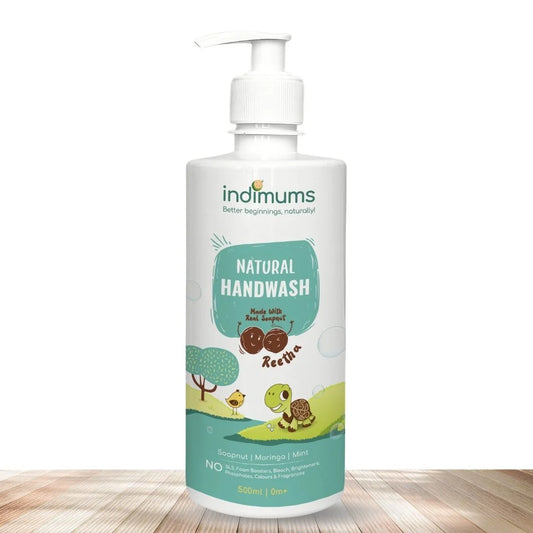
The Indimums Natural Handwash is made for repeated baby and kid handwashing. Reetha removes dirt without stripping the skin's natural oils, while Shikakai helps hands feel softer after washing. Moringa Leaf Extract supports skin health through repeated cleansing, and Mint Essential Oil gives a clean functional feel without synthetic fragrance.
It avoids SLS, SLES, triclosan, synthetic fragrance and drying alcohol-led cleansing because cracked baby hands do not need a stronger smell. They need a wash that cleans and leaves the barrier with less repair work.
Keep baby handwashing gentle with a formula made for repeated daily use.

How It Compares
| Aspect | Other hand wash | Indimums approach |
|---|---|---|
| Base | Strong soap or sulphate-led wash | Reetha and shikakai support gentle cleansing |
| Fragrance | Strong scent may signal cleanliness | No synthetic fragrance |
| Key active ingredients | Often antibacterial claim-led | Reetha, shikakai, moringa and mint |
| Skin impact | May dry or tighten with repeated use | Built for frequent handwashing comfort |
| Sensitive baby use | May be too strong for small hands | Made for baby and kid routines |
| Free-from choices | May include triclosan or harsh sulphates | No SLS, SLES, triclosan or synthetic fragrance |
| Philosophy | Make hands feel disinfected | Clean without stripping the barrier |
What helps baby hands recover comfort
Wash at key moments: before eating, after outdoor play, after visible dirt and after contact with messy surfaces. Use lukewarm water, a small amount of cleanser and a soft towel.
If hands are already rough, moisturise after washing and reduce unnecessary washes. The goal is clean hands that can still bend, grip and play comfortably.
When irritation signs need a closer look
This blog has answered why washing may leave baby hands dry or cracked. If you want to identify whether the reaction is irritation from the soap itself, the next blog breaks down the signs to watch. Read next: What Are the Signs of Irritation From a Baby Hand Soap? — What Parents Miss.
Hygiene should not roughen tiny hands
You began with a good habit that seemed to create a new problem. That does not mean handwashing is wrong. It means the routine needs to be gentler, better timed and supported with moisture when the skin asks for it. Baby hands are busy all day, so the wash should clean without leaving them tight or cracked. If it does not serve your baby it does not go in.
FAQs
Q1. Why are my baby's hands dry and cracked after washing?
A1. Dry cracked hands can happen when washing is frequent and the cleanser is too strong or drying. Water temperature, rubbing and poor drying can also make it worse.
Q2. Is the hand wash too strong for baby hands?
A2. It may be too strong if hands feel tight, red or rough after washing. Check for harsh sulphates, strong fragrance, triclosan and drying alcohol-heavy formulas.
Q3. Should I stop washing my baby's hands?
A3. No, handwashing still matters when hands are dirty, before eating or after outdoor play. The better step is choosing a gentler wash and moisturising when the skin feels dry.
Q4. Can sanitiser dry baby hands?
A4. Yes, alcohol-based sanitiser can dry skin when used often. Soap and water are preferred when available, with adult supervision for sanitiser if needed.
Q5. What should baby hand wash contain?
A5. Look for a mild cleansing base and ingredients that support comfort during repeated washing. Reetha, shikakai and moringa can make sense in a baby-specific hand wash.
Q6. When should I call a doctor for cracked baby hands?
A6. Ask a doctor if cracks bleed, ooze, look infected or do not improve with a gentler routine. Painful cracks need more than product switching.