Saumya, Founder | 4 mins
You notice it in an ordinary parenting moment. A bath, a bottle, a floor, a tiny hand or a piece of clothing suddenly feels like a bigger decision than it used to. That is usually when can frequent hand washing cause rashes in kids? becomes part of your baby’s daily routine.
Table of Contents
- Can Frequent Hand Washing Cause Rashes in Kids?
- Can Frequent Hand Washing Cause Rashes in Kids?
- Why frequent hand washing adds up
- Why is baby-specific hand wash recommended?
- What can I use to clean baby hands?
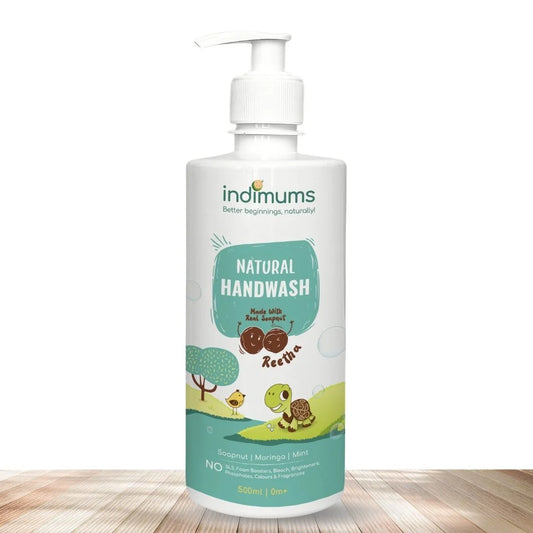
- The Indimums Baby Hand Wash
- How It Compares
- Hand hygiene changes once babies start exploring
- Clean hands should still feel like baby hands
- FAQs
Can Frequent Hand Washing Cause Rashes in Kids?
Quick Answer: Baby hand wash should clean frequent-contact hands without drying them out. Choose a mild formula without triclosan, SLS, SLES or synthetic fragrance.
Can Frequent Hand Washing Cause Rashes in Kids?
The World Health Organization supports hand hygiene at key moments to reduce germ transfer. In parent language, Hand-wash questions begin when babies start touching floors, snacks, toys and then their mouth. Hygiene matters, but so does repeated skin contact. Here is what most people miss: the front label rarely tells the whole story.
Why frequent hand washing adds up
What is happening underneath. Baby hands are washed repeatedly and return to the mouth quickly. Each wash removes some surface oils, especially when the cleanser is strong.
Why babies need a different standard. Every wash removes some surface oil. On small hands washed many times a day, strong surfactants or alcohol can dry the skin faster.
Why is baby-specific hand wash recommended?
- Triclosan - is unnecessary for everyday baby hand hygiene
- SLS and SLES - can dry hands washed often
- Alcohol-heavy cleansers - can make small hands tight
- Synthetic fragrance - adds residue before food and mouthing
- Synthetic dyes - add colour without cleanliness
None of this means parents need to panic. It means the ingredient list should do fewer, clearer jobs.
What can I use to clean baby hands?
- Reetha (soapnut) - cleans without an adult-style harsh feel
- Neem - supports hygiene for hands touching floors and toys
- Aloe vera - helps comfort after washing
- Glycerin - supports moisture through repeated use
- Easy rinsing - matters because hands go back to the mouth
For Reetha-based cleansing, you can read more about soapnut here.
If this concern feels familiar, the calmer answer is usually a better foundation, not a louder product.
The Indimums Baby Hand Wash
The Indimums Baby Hand Wash is built for this exact kind of baby-care question.
What is in it:
- Reetha (soapnut) - effective plant-based cleansing at infant-skin-compatible pH
- Neem - natural antimicrobial support without triclosan
- Aloe vera - soothes and hydrates through repeated washing
- Glycerin - maintains moisture balance through multiple washes
- Essential oils in safe functional concentrations - avoid synthetic fragrance
What is not in it: SLS, SLES, triclosan, parabens, synthetic fragrance, alcohol, phenoxyethanol, synthetic dyes.
"We could wash his hands more often without them turning rough by evening." - Indimums Parent Community
Many parents who switch notice that the routine feels calmer because the formula is not trying to impress with foam, perfume or coating.

How It Compares
| Aspect | The Indimums Baby Hand Wash | Typical hand wash |
|---|---|---|
| Cleansing or moisturising base | Reetha (soapnut) - effective plant-based cleansing at infant-skin-compatible pH | Usually built around stronger sensory cues |
| Fragrance | avoid synthetic fragrance | Often includes synthetic fragrance |
| Key active ingredients | Reetha (soapnut), Neem, Aloe vera, Glycerin | Often vague or not function-led |
| Skin, scalp or surface impact | Designed around baby contact and residue control | Often designed around adult expectations |
| Suitable for sensitive or newborn skin | Avoids SLS, SLES, triclosan, parabens | May include avoidable residue or scent |
| Preservatives | Avoids harsh preservative categories | May use stronger preservative systems |
| Philosophy | Foundation-first care with fewer unnecessary extras | More scent, foam or coating is treated as proof |
Hand hygiene changes once babies start exploring
This blog answers the hand-wash question in front of you. The linked article explains regular hand soap and whether it belongs in a baby routine. Read it next before choosing what stays near the sink.
Read next: Can You Wash Baby Hands With Hand Soap? Read This First
Clean hands should still feel like baby hands
You started with a specific question because one part of the routine did not feel simple anymore. The better answer is not the loudest product, the strongest smell or the quickest visible promise. It is the choice that supports your baby’s skin, scalp, fabric, floor or feeding surface before irritation becomes the reason to change. Questioning is also care.
FAQs
Q1. Can Frequent Hand Washing Cause Rashes in Kids?
A1. Baby hand wash should clean frequent-contact hands without drying them out. Choose a mild formula without triclosan, SLS, SLES or synthetic fragrance.
Q2. What can I use to clean baby hands?
A2. Look for the version that fits the actual contact point: skin, scalp, fabric, floor or feeding surface. For this topic, Reetha (soapnut) and Neem matter because they have clear jobs.
Q3. Why is baby-specific hand wash recommended?
A3. Avoid SLS, SLES, triclosan, parabens. They add scent, residue or harshness without making the routine more baby-appropriate.
Q4. Do Indian playgrounds need extra hand cleaning?
A4. Yes, Indian heat, humidity, dust, AC and frequent baths can change how often the routine is needed. The product should still stay gentle.
Q5. Is sanitiser better than baby hand wash?
A5. No. Strong smell, foam or heaviness is not proof that a product works better for babies. Residue and skin comfort matter more.
Q6. How often should I use baby hand wash?
A6. Use baby hand wash when the routine actually needs it, then keep the amount modest. More product is not automatically better care.