Saumya, Founder | 4 mins
Two shampoos can sit side by side and both say gentle. One can be built around a strong foam-first surfactant. The other can begin with a plant cleansing base like Reetha. Your baby's scalp does not experience those two choices in the same way.
Table of Contents
- Reetha vs SLS in Baby Shampoo — What Your Baby's Scalp Is Actually Exposed To
- What your baby’s scalp meets during shampooing
- Why SLS exposure is different on a baby scalp
- Why reetha works differently as a cleansing base
- How Indimums Baby Shampoo uses reetha without making it a token ingredient
- How It Compares
- How to decide between reetha and SLS on a label
- FAQs
Reetha vs SLS in Baby Shampoo — What Your Baby's Scalp Is Actually Exposed To
Quick Answer: Reetha and SLS clean in very different ways. SLS is a strong synthetic surfactant known for foam and stripping power, while Reetha contains natural saponins that can cleanse more gently when properly formulated. For baby shampoo, the key question is what touches the scalp repeatedly, not how much it foams.
What your baby’s scalp meets during shampooing
During shampooing, the scalp is exposed to water, cleanser, fragrance, preservatives and whatever residue remains after rinsing. Parents often notice the visible parts: foam, smell and how easily oil comes off. The scalp feels the less visible part: whether the cleanser removed only buildup or also took away comfort.
A baby's scalp has fine hair, developing oil patterns and skin that can react quickly to dryness. This is why the cleansing base deserves more attention than the marketing language on the front of the bottle.
Why SLS exposure is different on a baby scalp
SLS, or sodium lauryl sulfate, is a surfactant that helps remove oil and create foam. It can be useful in many cleaning contexts, but stronger cleansing is not automatically better for babies. Research and dermatology discussions often treat SLS as a known irritant model because it can disturb the skin barrier under certain conditions.
In parent language, SLS can clean so effectively that it may take away more than the day's sweat or oil. On a baby scalp, that can show up as rough hair, tightness, extra dryness or the feeling that shampoo must be followed by more oil to restore comfort.
The issue is not panic. It is proportion. A baby scalp does not usually need the same lather strength an adult shampoo uses to remove styling products, pollution and heavy sebum.
Why reetha works differently as a cleansing base
Reetha, also called soapnut, contains plant saponins. Saponins help loosen oil and residue with a softer cleansing action than foam-led synthetic surfactants. Indian households have used Reetha for generations because it cleans without the same stripped feeling many harsh cleansers leave behind.
For baby shampoo, Reetha is not about nostalgia alone. It answers a formulation question: can the product clean sweat, light oil and everyday buildup while still respecting the scalp foundation? When used in a controlled formula, Reetha can be part of that gentler answer.
How Indimums Baby Shampoo uses reetha without making it a token ingredient
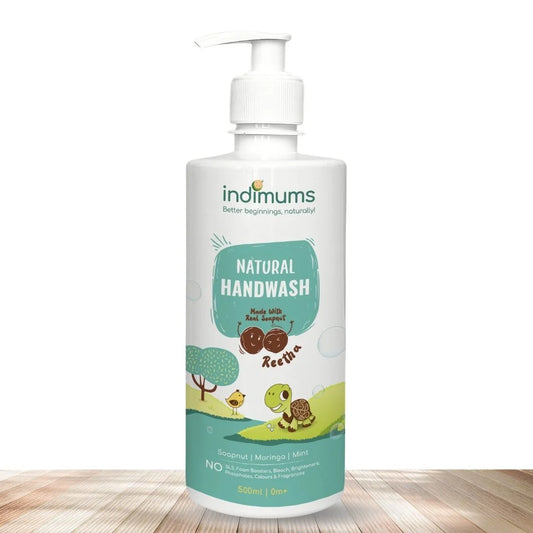
The Indimums Baby Shampoo uses Reetha as a real cleansing base, not just as a front-label herb. You can read more about soapnut here. Shikakai supports soft hair without silicones, Neem Leaf Extract helps calm scalp stress, Almond Oil supports moisture after washing and Flaxseed Oil helps maintain hair texture. The formula avoids SLS, SLES, synthetic fragrance, parabens and foam boosters.
That matters because a baby's scalp should not need repair after every wash. The cleanser should be the beginning of comfort, not the reason comfort is lost.

How It Compares
| Aspect | Other baby shampoo | Indimums approach |
|---|---|---|
| Cleansing base | May use SLS, SLES or foam-led surfactants | Reetha and Decyl Glucoside support gentler cleansing |
| Foam signal | Big lather may be treated as proof of cleaning | Softer foam focuses on need-based cleansing |
| Scalp oils | Can remove more oil than baby scalp needs | Designed to clean without stripping scalp comfort |
| Hair feel | May need silicone-like slip after cleansing | Shikakai, almond and flaxseed support softness |
| Fragrance | Perfume may make shampoo feel mild | No synthetic fragrance |
| Philosophy | Clean strongly, then soften later | Protect the scalp foundation during cleansing itself |
How to decide between reetha and SLS on a label
Do not stop at the front claim. Turn the bottle and look at the first few functional ingredients. If the formula relies on SLS or SLES, expect a stronger cleansing profile. If Reetha is present but buried behind a harsh base, it may be more of a label story than a scalp solution.
Also consider your baby's routine. If you oil before bath, the shampoo needs to remove oil gently. If you shampoo only once or twice a week, it should still leave the scalp comfortable between washes. If the scalp feels dry after every shampoo, the cleanser base is worth questioning.
The label-reading question continues here
This blog has explained the difference between Reetha and SLS as cleansing bases. The label-reading blog looks at how mainstream baby shampoo claims can hide foam-first formulas behind gentle wording. Reading it next makes sense if you want to compare bottles more confidently before buying.
Read next: What We Found When We Read 20 Baby Shampoo Labels in India
Conclusion: The gentler scalp decision starts before the lather
You began with two cleanser names, but the real question is what your baby's scalp is asked to tolerate. SLS can give parents the visible comfort of foam, while Reetha-led cleansing is quieter and more foundation-focused. A baby shampoo should remove what the scalp does not need while leaving behind the comfort it does. That is the difference worth reading for. Foundation over Fix.
FAQs
Q1. Reetha vs SLS in baby shampoo — what is the difference?
A1. SLS is a strong synthetic surfactant used for foam and cleansing power, while Reetha contains natural saponins that cleanse more gently. For baby scalp, the difference matters because the goal is removing buildup without stripping scalp oils.
Q2. Is SLS safe in baby shampoo?
A2. SLS can be irritating for some skin and scalp types, especially with repeated exposure or sensitive skin. For babies, many parents prefer avoiding SLS because the scalp is still developing and does not need strong adult-style cleansing.
Q3. Is Reetha good for baby shampoo?
A3. Reetha can be a useful baby shampoo base when formulated properly because its saponins help cleanse without chasing heavy foam. It should still be part of a balanced formula, not used as a raw home remedy on baby scalp.
Q4. Does Reetha foam like SLS?
A4. No, Reetha usually creates a softer, lower foam than SLS. Lower foam does not mean poor cleaning; it often means the formula is not relying on a harsh lather cue.
Q5. Can SLS make baby scalp dry?
A5. Strong cleansing can remove scalp oils that help comfort and balance. If hair feels rough or the scalp feels tight after washing, the cleanser base is worth checking.
Q6. Why does Indimums use Reetha in baby shampoo?
A6. Indimums uses Reetha as the cleansing foundation because it supports gentle washing without SLS or SLES. It is paired with Shikakai, Neem Leaf Extract, Almond Oil and Flaxseed Oil for scalp and hair comfort.