Saumya, Founder | 4 mins
You open the washer expecting clean cotton and the scent reaches you before the clothes do. Sometimes it is a heavy floral perfume; sometimes it turns sour when the vest warms on the baby. Strong smell after washing is not one problem. It can mean fragrance was deliberately left behind, detergent did not rinse, dampness stayed trapped or the machine recontaminated the load.
Table of Contents
- Strong smell on baby clothes after washing
- Perfume strong sour or musty — identify the smell first
- How Indimums cleans without synthetic perfume
- How It Compares
- What causes strong fragrance after a wash
- When the machine is putting the smell back
- How to fix the smell step by step
- How to stop it returning
- FAQs
Strong smell on baby clothes after washing — what causes it and how to fix it
Quick Answer: A strong perfume smell usually comes from scented detergent, fabric softener or overdosing. Sour or musty odour points more toward incomplete drying, an overloaded washer, biofilm in the machine or soil that was not removed. Rewashing with no added perfume and an extra rinse helps separate fragrance residue from a hygiene or moisture problem.
Perfume strong sour or musty — identify the smell first
Perfume-heavy clothes smell strongest when dry and may keep scent for days. This is often intentional fragrance deposition from detergent, scent beads, softener or dryer sheets. Sour clothes may have sat wet too long, been washed at an ineffective dose or retained milk and sweat. Musty clothes suggest prolonged dampness, washer buildup or storage before complete drying.
Smell the empty drum, rubber seal, detergent drawer and a clean wet towel. If they carry the same odour, the machine is involved. If only one garment smells, inspect milk folds, bib backing, elastics and layered seams where soil and water linger.
How Indimums cleans without synthetic perfume
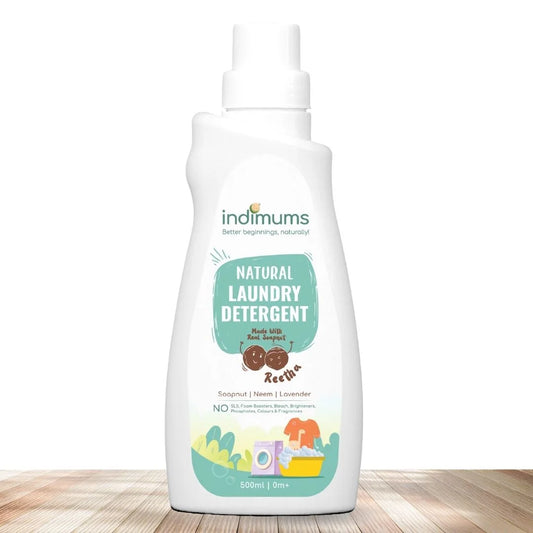
The Indimums Natural Laundry Detergent uses Reetha saponins to loosen oily stains, Shikakai to work alongside the cleansing base, Neem Seed Extract to support fabric hygiene and Lavender Essential Oil in a functional amount rather than synthetic fragrance engineered to cling.
The formula contains no SLS, synthetic fragrance, optical brighteners or parabens. Clothes may carry a mild natural note, but scent is not the cleaning result. Correct dose, adequate movement, rinsing and full drying complete the routine.
Choose laundry care that removes baby odours instead of covering them with a stronger one

How It Compares
| Aspect | Other laundry detergents | Indimums approach |
|---|---|---|
| Scent system | Synthetic perfume may be designed to remain | No synthetic fragrance |
| Cleansing base | May use strong synthetic surfactant blends | Reetha and Shikakai provide plant-derived cleansing |
| Key ingredients | Perfume softener and brighteners may signal freshness | Reetha Shikakai Neem and Lavender essential oil |
| After-wash cue | A lasting scent can be treated as proof of clean | Clean fabric should rinse and dry without heavy perfume |
| Buildup risk | Overdosing multiplies scent and residue | Measured dose and complete rinsing remain central |
| Philosophy | Cover odour with a stronger fragrance | Remove soil and moisture that cause odour |
What causes strong fragrance after a wash
Laundry fragrance is designed to survive rinsing and remain on fabric. Fabric softener intentionally coats fibres to change feel and deliver scent. Using both a scented detergent and softener layers those materials, and overdosing increases what the rinse must remove.
Hard water can reduce cleaning efficiency and encourage families to add too much detergent. An overloaded drum limits movement and rinse flow, while a short eco cycle may not suit a heavily soiled baby load. A powerful smell can therefore signal added fragrance rather than removed soil.
When the machine is putting the smell back
Low-temperature washing, frequent liquid detergent overdosing and leaving the door closed can allow residue and microbial biofilm to collect in the drawer, seal, filter and outer drum. The next wash moves that odour onto clothes. Front-load seals deserve special inspection because water and lint remain in their folds.
Follow the manufacturer’s cleaning-cycle instructions, clean removable parts, clear the filter safely and leave the door and drawer open to dry. Do not mix cleaning chemicals. Chlorine bleach with acids or ammonia can create dangerous gases, so machine cleaning should use one approved method at a time.
How to fix the smell step by step
First, rewash the clothes without fabric softener, scent beads or additional detergent and select an extra rinse. If the smell disappears, product residue was likely involved. If it remains sour, pre-rinse milk or food areas, wash with the correct measured dose and avoid overloading.
Dry immediately after the cycle. Use sun and airflow where the fabric label permits, and turn thick seams or elastics outward. Do not store clothes that feel cool or damp. If every load smells, pause baby laundry and clean the machine according to its manual before testing with plain cotton towels.
How to stop it returning
Measure detergent rather than pouring by eye. Match dose to soil, load and water hardness. Leave enough drum space for clothes to lift and fall, remove the load promptly and dry it fully. Skip softener on baby clothes, especially for sensitive skin and absorbent items such as towels and cloth diapers.
Rinse milk and poop before they dry, and wash bibs or heavily soiled pieces separately when useful. Keep dirty laundry ventilated rather than sealed damp in a basket. The freshest baby clothes are not the most perfumed; they are the ones from which soil, cleanser and water have all left properly.
When smell and residue become a skin question
This guide has separated fragrance deposition from sour or musty odour. The next blog explains how remaining detergent, softener and fragrance can matter when clean-looking clothes sit against sensitive skin for hours. Read it if strong-smelling loads are followed by redness or itching.
Read next: Which Baby Laundry Detergent Is Safest for Sensitive Skin? — What Residue Does
Summary: Clean baby clothes should not announce themselves across the room
You began with a scent that arrived before the laundry did. Heavy perfume usually reflects deposited fragrance; sour or musty odour points toward remaining soil, dampness or washer buildup. Identify the smell, remove added scent, correct the dose and rinse, then dry every layer completely. The goal is not fragrance-free perfection but fabric that is genuinely clean and comfortable against skin. Better beginnings naturally.
FAQs
Q1. Why do baby clothes smell strongly after washing?
A1. The usual causes are excess scented detergent, fabric softener, an overloaded machine or poor rinsing. A musty smell instead suggests trapped dampness, delayed drying or buildup inside the washer.
Q2. Is fragrance on baby clothes harmful?
A2. A strong smell does not prove harm, but fragrance is a recognised trigger for some sensitive or eczema-prone skin. Baby clothes do not need a lasting perfume to be hygienically clean.
Q3. How do I remove detergent smell from baby clothes?
A3. Rewash without adding more detergent and use an extra rinse, then dry the clothes fully. Clean the washer drawer, seal and filter if the smell returns across different loads.
Q4. Should baby clothes smell like nothing after washing?
A4. They may retain a faint neutral fabric or functional essential-oil scent, but the smell should not dominate the room or intensify when damp. Cleanliness is better judged by stain removal, freshness after drying and absence of residue.
Q5. Can too much detergent make clothes smell worse?
A5. Yes. Excess product may not rinse away and can trap soil, perfume and moisture in fabric. It can also build up inside the washer and transfer to later loads.
Q6. When should I replace musty baby clothes?
A6. Most odour can be corrected with proper washing and complete drying. Replace items with visible mould that remains after appropriate cleaning, damaged fibres or persistent odour that returns as soon as the garment becomes damp.