Saumya, Founder | 4 mins
Baby hand washing sounds simple until the fingers start looking dry. One day you notice tiny rough patches near the knuckles, a little redness between the fingers or your baby pulling their hands away after washing. The soap still looks gentle on the bottle, so it is easy to miss that the routine itself may be asking too much from very young skin.
Table of Contents
- What are the signs of irritation from a baby hand soap?
- Why baby hand irritation is easy to miss
- Why frequent hand washing changes baby skin
- How Indimums Baby Hand Wash supports repeated washing
- How It Compares
- What should I avoid in baby hand soap?
- What helps keep baby hands comfortable?
- FAQs
What are the signs of irritation from a baby hand soap?
Quick Answer: Signs of irritation from a baby hand soap can include redness, dryness, tight-looking skin, rough patches, stinging during washing, itching, peeling, or your baby rubbing their hands after a wash. It can also show up slowly when the same soap is used many times a day, especially if it contains strong fragrance, harsh surfactants or drying antibacterial agents.
Why baby hand irritation is easy to miss
Hands are busy, so parents often blame the weather, crawling, dust or sanitiser before they blame soap. But hands are also washed more often than most other baby skin areas. That repeated contact matters, especially once a baby starts touching toys, floors, food, pets, shoes and every interesting corner of the house.
Irritation does not always begin as a dramatic rash. It may begin as a slightly rough feel after drying, a tight look on the back of the hand or redness that appears only after washing. If those signs repeat after the same product or routine, the cleanser deserves a closer look.
Why frequent hand washing changes baby skin
Soap removes more than visible dirt
Soap works by loosening dirt and oil so water can carry them away. That is useful for hygiene, but stronger cleansers can also remove too much of the skin's natural lipid layer. In baby skin, that layer is still developing, so over-cleansing can leave hands feeling dry faster than adult hands.
Repeated exposure compounds the effect
The CDC recommends soap-and-water handwashing for removing germs, but babies are not miniature adults. Their hands may be washed after crawling, before food, after play, after outings and after messy snacks. When a cleanser is drying, the effect is not one wash. It is the fifth or sixth wash on the same small barrier.
Fragrance can confuse the signal
A strong scent can make hands feel cleaner to adults, but it does not make a baby cleanser gentler. If the skin is already dry or red, fragrance adds one more unnecessary contact. Parent translation: clean should not have to smell loud.
How Indimums Baby Hand Wash supports repeated washing
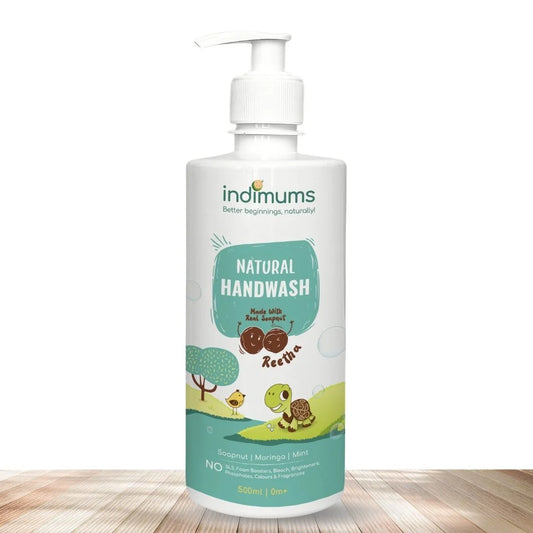
The Indimums Baby Hand Wash is made for the reality of baby hands: frequent cleaning, food contact, floor contact and skin that should not feel tight after every wash. It is not built to create a harsh antibacterial feel. It is built to clean while keeping the routine repeatable.
Reetha helps remove dirt and daily grime without a stripped-after-wash feel. Shikakai supports a softer rinse so hands do not feel rough after drying. Moringa Leaf Extract supports skin comfort during repeated washing, while Mint Essential Oil gives a clean functional freshness without relying on synthetic fragrance. Potassium Sorbate keeps the formula stable without turning the product into a heavy preservative story.
There is no SLS, no SLES, no triclosan, no synthetic fragrance, no alcohol-heavy daily routine and no harsh foam-first logic. That matters because the safest daily hand wash is the one you can use when needed without making the next wash feel like a setback.

How It Compares
| Aspect | Other hand wash | Indimums approach |
|---|---|---|
| Cleansing base | May rely on stronger foam or adult-style surfactants | Reetha and Shikakai support gentle daily cleansing |
| Fragrance | Synthetic scent may be used to signal cleanliness | No synthetic fragrance |
| Key active ingredients | Often centred on antibacterial claims | Reetha, Shikakai, Moringa Leaf Extract and Mint Essential Oil |
| Skin impact | Can leave baby hands dry or tight with repeated use | Designed for frequent hand washing without a stripped feel |
| Sensitive baby use | May not be made for multiple baby washes per day | Built around repeated baby contact |
| Free-from choices | May include SLS, SLES, triclosan, alcohol or strong perfume | No SLS, no SLES, no triclosan, no synthetic fragrance |
| Philosophy | Make hands smell clean quickly | Clean well while protecting the routine babies repeat every day |
What should I avoid in baby hand soap?
Avoid judging baby hand soap only by bubbles, smell or an antibacterial claim. Those signals can feel reassuring to adults, but they do not automatically make a product better for baby hands.
- SLS or SLES - strong foam can be drying when used many times a day
- Triclosan-style antibacterial positioning - daily baby hand care does not need harsh antibacterial drama
- Synthetic fragrance - scent can add exposure without improving hygiene
- Alcohol-heavy formulas - they can make dryness and tightness more noticeable
- Hot water - warm or cool running water is enough for washing
- Rough towel drying - rubbing can worsen irritated knuckles and finger folds
What helps keep baby hands comfortable?
Use hand wash when hands are visibly dirty, after outdoor play, before eating and after contact with shoes, pets, dustbins or bathroom surfaces. Rinse fully because leftover cleanser can keep irritating skin even when the wash itself is mild.
Pat hands dry, especially between fingers. If the skin looks tight, reduce unnecessary washing and avoid scented products for a few days. For babies who crawl or mouth their fingers often, gentle consistency matters more than a stronger one-time clean.
Clean hands should not mean dry hands
You started with a small sign: redness after washing, rough fingers or a baby who suddenly dislikes the sink. Those signs matter because hand hygiene should protect the child without wearing down the skin that has to repeat the routine tomorrow. The foundation is simple: clean what needs cleaning, avoid what adds irritation and keep the barrier comfortable enough to do it again. What you leave out matters as much as what you put in.
FAQs
Q1. What are the signs of irritation from a baby hand soap?
A1. Look for redness, dryness, tight skin, peeling, itching, rough patches or stinging during washing. The sign may appear after repeated use rather than the first wash.
Q2. Can baby hand soap cause dryness?
A2. Yes, especially if it uses harsh surfactants, strong fragrance or alcohol-heavy cleansing. Frequent washing can make dryness show faster on baby hands.
Q3. Is fragrance in baby hand wash necessary?
A3. No, fragrance does not make hands cleaner. For babies with sensitive or frequently washed skin, avoiding synthetic fragrance is usually the calmer choice.
Q4. Should I stop using hand wash if my baby's hands are red?
A4. Pause the suspected product and switch to a gentler routine while watching the skin. If redness spreads, cracks or does not settle, ask your paediatrician.
Q5. How often should baby hands be washed?
A5. Wash when needed: before food, after outdoor play, after toilet or diaper contact and when hands are visibly dirty. You do not need to wash automatically every few minutes at home.
Q6. What should a baby hand wash avoid?
A6. Avoid SLS, SLES, triclosan, synthetic fragrance and alcohol-heavy formulas for routine use. A baby hand wash should clean without leaving the skin tight or rough.