Saumya, Founder | 5 min read
One reetha product shows whole soapnuts soaking in a bowl. Another lists an extract. It is tempting to assume the first is more authentic and the second has lost what made the plant useful. But soaking is itself a form of processing. The important difference is what each method extracts and how the resulting preparation is controlled.
Table Of Contents
- How Does Soaked Reetha Differ From A Prepared Extract?
- What Happens When Reetha Is Soaked In Water?
- What Can Processing Add Beyond Soaking?
- How It Compares
- Why Do Consistency And Storage Matter?
- How Does This Apply To Indimums Reetha?
- FAQs
How Does Soaked Reetha Differ From A Prepared Extract?
Quick Answer: Traditional soaking uses water to draw soluble compounds from reetha fruit. Processing may also include grinding, heating, filtering, concentrating or drying. Both can produce a reetha-derived cleanser; the practical differences are strength, consistency, storage and suitability for the intended use, not a simple natural-versus-synthetic divide.
What Happens When Reetha Is Soaked In Water?
Water comes into contact with the fruit material and draws out some of its soluble components, including saponins. The result depends on how much fruit and water are used, how the fruit is prepared and how long it stays in contact. Two bowls that look similar need not contain the same concentration.
Soaking is an extraction method, not the absence of processing. A home preparation may be perfectly recognisable as reetha while still being difficult to measure. Colour and foam provide clues about appearance, but they do not establish a standard dose or a safe storage period.
What Can Processing Add Beyond Soaking?
Processing is a broad word. It can mean separating solids from liquid, reducing water to make a concentrate, drying an extract or using a specified extraction procedure. None of these steps automatically makes the original plant synthetic. Equally, the word extract does not tell you that a supplier has standardised every batch.
Research published in the New Journal of Chemistry has investigated water extraction and purification of soapnut saponins. The point is that extraction conditions are measurable variables. It is not proof that one commercial method always outperforms traditional soaking, or that Indimums follows the procedure used in that paper.
How It Compares
These are general preparation differences. A supplier's actual specification is needed to describe a particular processed ingredient.
| Aspect | Traditionally Soaked Reetha | Prepared Reetha Extract |
|---|---|---|
| Starting material | Reetha fruit material | Reetha fruit material or a specified input |
| Method | Water contact, sometimes with other steps | May include extraction, filtration or concentration |
| Strength | Varies with the recipe | May be specified; check supplier data |
| Appearance | Can include colour and suspended material | Depends on filtering and form |
| Storage | No automatic shelf-life assurance | Depends on specification and preservation |
| Authenticity | Plant origin does not prove purity | Processing does not erase plant origin |
| Baby use | Not established by a traditional recipe | Depends on the finished baby-care formula |
Why Do Consistency And Storage Matter?
A repeatable ingredient specification helps a formulator work with a known material. Relevant details can include botanical identity, concentration and microbiological quality. These are questions to check, not benefits to assume because a package looks professional. A product needs evidence for its own quality controls.
The FDA identifies contaminated raw materials, inadequate preservation and poor storage among routes for microbial contamination in cosmetics. A water-based plant preparation therefore needs more thought than whether it smells fresh. Do not dilute a finished wash or replace its directions with a homemade storage rule.
How Does This Apply To Indimums Reetha?
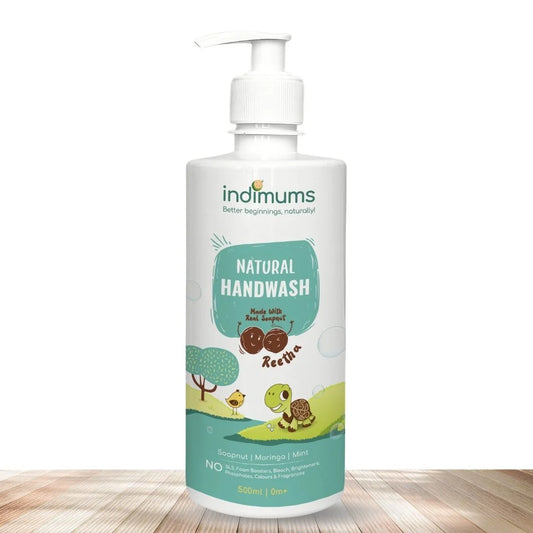
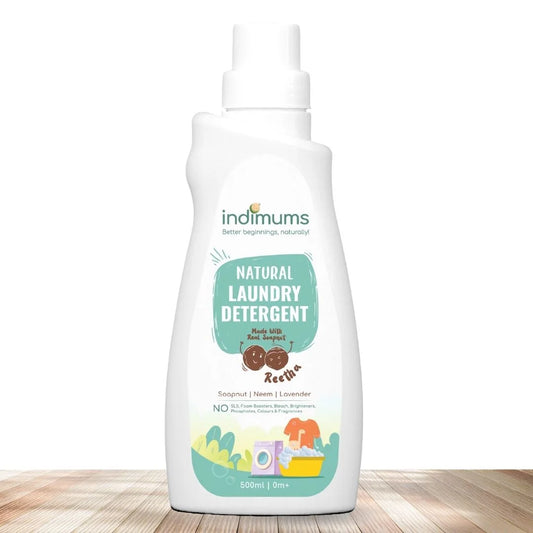
Indimums identifies reetha as a key botanical and describes sourcing from tribal farming communities in Karnataka. That explains origin, while the finished ingredient list explains its place in a formula. A familiar plant can remain central to a prepared wash without requiring parents to soak fruit or judge a homemade liquid's strength.
Our time-tested and lab-tested approach brings traditional ingredient knowledge into a finished-product discussion. The useful next step is to assess the actual formula and directions, rather than decide that either 'soaked' or 'processed' is a complete quality verdict.
Understand The Ingredient Before Judging The Method
Both preparations begin with the same question: what is the fruit contributing to the wash? Separating that from manufacturing language makes the comparison clearer.
Visit Why Soapnut for Indimums' ingredient rationale, then use the full product label to understand the specific formula.
Conclusion: Ask What Was Controlled, Not Just What Was Called Natural
Traditionally soaked reetha and a processed extract are not opposites. They sit along a range of ways to obtain useful compounds from the fruit. The meaningful differences concern what is extracted, how consistently it is supplied and how the preparation is kept suitable for use.
For a baby's routine, choose the finished product by its intended purpose and directions. A reassuring preparation story should support clear information, not replace it.
FAQs
Q1. Is traditionally soaked reetha unprocessed?
A1. No, soaking is a basic extraction process. It changes the preparation by moving soluble compounds into water.
Q2. Does processed reetha mean synthetic reetha?
A2. No, processing can involve physical steps such as filtering or drying a plant extract. The specific process and ingredient identity need to be checked.
Q3. Is a reetha extract always standardised?
A3. Not necessarily; extract and standardised extract are not interchangeable descriptions. Ask what specification is actually supplied.
Q4. Does boiling reetha guarantee a safer preparation?
A4. No, heating alone does not establish concentration, storage stability or suitability for a baby. A safe-use conclusion needs more than the preparation temperature.
Q5. Does Indimums publish its exact extraction method?
A5. The reference pages used here do not specify its extraction time, temperature or technology. They should not be used to invent a manufacturing method.
Q6. Can I add soaked reetha water to baby shampoo?
A6. Do not alter a finished shampoo by adding a homemade liquid. Dilution can change its performance and preservation, so follow the original directions.