Saumya, Founder | 4 mins
Baby hand wash becomes important in the small messy moments. A biscuit breaks in the palm, a toy rolls under the chair, fingers touch the floor and then move toward the mouth. When hands are washed many times a day, the formula matters as much as the habit.
Table of Contents
- What pH level is ideal for baby hand wash?
- Why pH matters for baby hands
- What should I avoid in baby hand wash?
- What helps hand wash stay gentle through the day?
- How Indimums Baby Hand Wash supports repeated washing
- How It Compares
- FAQs
What pH level is ideal for baby hand wash?
Quick Answer: The ideal baby hand wash should be close to the skin's natural comfort range, usually mildly acidic to skin-compatible rather than strongly alkaline. A gentle hand wash should clean dirt and germs without leaving hands dry, tight or heavily scented after repeated washing.
Why pH matters for baby hands
pH tells you how acidic or alkaline a product is. Baby skin has a natural surface environment that helps the barrier stay comfortable. When a cleanser is too alkaline, especially with repeated use, hands can start to feel dry, rough or tight.
Hands are also washed more often than many parents realise. Before food, after play, after touching shoes, after crawling near the floor, after toilet training or after messy snacks. Each wash is small, but the exposure adds up across the day.
That is why a baby hand wash should not only clean once. It should be gentle enough to repeat. The goal is clean hands without making the skin barrier feel like it has to recover after every wash.
A skin-compatible pH matters most when washing becomes frequent. One wash may not tell you much, but five or six washes in a day can reveal whether the formula is too drying. Baby hands should feel clean and normal afterward, not powdery, tight or rough.
What should I avoid in baby hand wash?
Avoid very alkaline soap bars as the default for frequent washing. They can clean, but repeated use may leave baby hands feeling dry. If hands need washing many times a day, gentleness becomes part of hygiene, not separate from it.
Also avoid synthetic fragrance, triclosan, harsh antibacterial claims, SLS, SLES and alcohol-heavy formulas used as a routine substitute. These may feel strong, but strong is not always better for baby hands. Clean should not mean tight or stinging.
If a product leaves the hands smelling powerful or feeling squeaky, that is a sign to pause. A good baby hand wash should rinse clearly and leave hands comfortable enough for the next wash later in the day.
Sanitiser can be useful in specific moments, but it should not replace gentle washing whenever water is available. Alcohol-heavy routines can dry small hands quickly, especially when the child is also touching food, toys, fabric and the floor through the day.
- Highly alkaline soap as the frequent default
- Synthetic fragrance
- SLS or SLES
- Triclosan or harsh antibacterial agents
- Alcohol-heavy routine use
- Over-washing when hands are already clean
What helps hand wash stay gentle through the day?
A good baby hand wash needs a mild cleansing base. It should remove dirt and daily grime, but it should not rely on aggressive foam to feel effective. Foam can help spread the product, but it is not proof that the formula is skin-friendly.
Moisture comfort matters because hands are small, exposed and used constantly. A formula that rinses cleanly and does not leave a tight feeling makes it easier for parents to wash at the right moments instead of avoiding washing because skin feels dry.
Technique helps too. Use a small amount, rub palms, fingers and between fingers, then rinse well. Pat dry instead of rubbing hard. If hands feel dry after repeated washing, check both the formula and how often sanitizer or harsh soap is being used.
Parents can also protect the routine by choosing the right moments. Wash before meals, after outdoor play, after toilet or diaper contact and whenever hands are visibly dirty. If hands are already clean, avoid washing just because the bottle is nearby.
This keeps hygiene practical instead of harsh. The child still learns clean-hand habits, but the skin is not asked to handle unnecessary cleanser contact every hour.
How Indimums Baby Hand Wash supports repeated washing
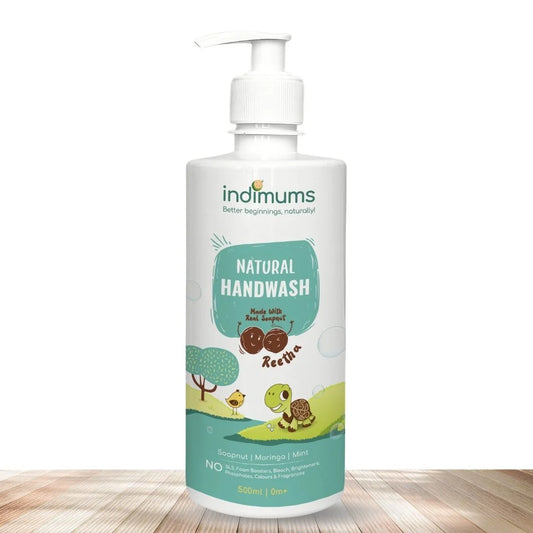
The Indimums Baby Hand Wash is made for repeated daily cleaning without turning hand washing into a harsh routine. Reetha helps remove dirt without stripping, Shikakai helps hands feel soft after washing, Moringa leaf extract supports skin comfort and Mint essential oil gives a clean functional feel without synthetic fragrance.
We avoid SLS, SLES, triclosan, parabens, synthetic fragrance, alcohol-heavy routine use and synthetic dyes because baby hands are washed again and again. The formula should support hygiene without making the skin pay for every wash.

How It Compares
| Aspect | Other hand wash | Indimums approach |
| Cleansing base | May rely on stronger foam or alkaline soap feel | Reetha and Shikakai support gentle cleansing |
| Fragrance | Synthetic scent may linger on hands | No synthetic fragrance |
| Key active ingredients | Often focused on antibacterial claims | Reetha, Shikakai, Moringa leaf extract and Mint essential oil |
| Skin impact | Can feel drying with repeated washing | Designed for comfort through daily hand washes |
| Baby hand fit | May be made for adult hand hygiene habits | Made for baby and child hand washing routines |
| Free-from choices | May include SLS, SLES, triclosan or synthetic dyes | No SLS, SLES, triclosan, parabens, synthetic fragrance or dyes |
| Philosophy | Make hands smell strongly clean | Clean hands without over-stressing skin |
When pH leads to hand-washing habits
This blog explains why pH and formula gentleness matter. The next question is when baby hands actually need washing and what to use when water is available. Read next: Can You Wash Baby Hands With Hand Soap?
Clean hands should still feel comfortable
You began with a pH question because baby hand washing happens many times in ordinary family life. The answer is not a harsher cleanser or a stronger smell. It is a skin-compatible formula that cleans when needed and leaves hands comfortable enough for the next wash. Hygiene works best when the foundation stays gentle. Questioning is also care.
FAQs
Q1. What pH level is ideal for baby hand wash?
A1. A mildly acidic to skin-compatible pH is usually ideal, close to the skin's natural comfort range rather than highly alkaline soap.
Q2. Is regular soap too alkaline for baby hands?
A2. Many soap bars are more alkaline and can feel drying with repeated washing.
Q3. Can I use adult hand wash for babies?
A3. It is better to use a baby-focused hand wash because adult formulas may be more fragranced or drying.
Q4. How often should baby hands be washed?
A4. Wash after outdoor play, before food, after toilet or diaper contact and whenever hands are visibly dirty.
Q5. Should baby hand wash have fragrance?
A5. Synthetic fragrance is not needed for clean hands and can add unnecessary contact through repeated washing.
Q6. What ingredients are good in baby hand wash?
A6. Look for gentle cleansing support with ingredients such as Reetha, Shikakai and Moringa in a simple formula.