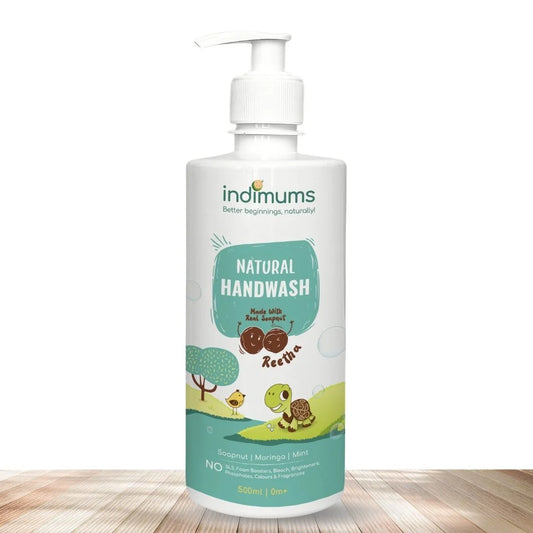
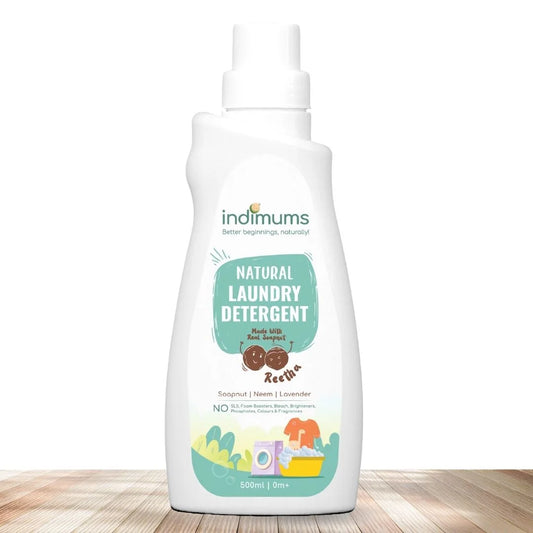
Saumya, Founder | 5 min read
Sustainability is an easy word to print beside a leaf. It becomes more meaningful when a brand explains the choices behind it. For Indimums, reetha connects ingredient selection with sourcing relationships. That is a useful starting point, provided we also keep the rest of the product's journey in view.
Table Of Contents
- How Does Reetha Sourcing Support Indimums' Sustainability Approach?
- Why Start With The Ingredient Rather Than The Packaging Claim?
- How Does The Farmer Relationship Fit Into This?
- Does Biodegradable Mean Harmless Wherever It Goes?
- What Else Belongs In The Sustainability Picture?
- What Can Parents Look For Beyond The Word Sustainable?
- FAQs
How Does Reetha Sourcing Support Indimums' Sustainability Approach?
Quick Answer: Reetha sourcing connects Indimums' plant-based ingredient choice with the Karnataka farming communities described in its sourcing account. That supports a people-and-materials approach to sustainability. It does not, on its own, make every finished product impact-free; processing, formulation, packaging, transport and disposal remain part of the picture.
Why Start With The Ingredient Rather Than The Packaging Claim?
Reetha is a plant material with a functional role in cleaning. It is not included only to decorate a sustainability story. Choosing a useful biological raw material gives the brand a concrete ingredient decision to explain before discussing the bottle around it. Function and sourcing can be considered together.
Plant origin is a starting point, not a complete environmental score. Cultivation, harvesting, preparation and transport still use resources. The word real should refer to an identifiable ingredient, not imply that all processed ingredients are fake or that using a fruit removes every environmental cost.
How Does The Farmer Relationship Fit Into This?
Our sourcing story describes Reetha and Shikakai grown by tribal farming communities in Karnataka, with direct relationships intended to connect their harvests to a wider market. That makes the social side of ingredient sourcing part of the conversation, rather than treating sustainability only as a packaging question.
We can explain that relationship without assigning an unsupported income increase or formal certification. A stated approach to livelihoods and a measured livelihood outcome are not the same thing. Keeping the distinction clear lets parents understand what the brand is working towards without confusing intention with an audited result.
Does Biodegradable Mean Harmless Wherever It Goes?
Not automatically. Environmental assessment needs to consider how readily a substance breaks down, what it becomes and how it affects aquatic life while present. A biodegradable ingredient is not permission to release concentrated wash directly into a stream or assume every part of a finished formula behaves the same way.
The US EPA's surfactant criteria consider biodegradation together with aquatic toxicity and degradation products. That framework is not an Indimums certification; it illustrates the questions behind a stronger environmental claim. An ingredient story should not be stretched into an unmeasured zero-impact promise.
What Else Belongs In The Sustainability Picture?
The complete formula, manufacturing steps, packaging and the amount used all matter. A concentrated ingredient may still be shipped in a heavy package; a plant-based wash can still be wasted through overuse. These are reasons to examine the whole product, not reasons to dismiss a thoughtful ingredient choice.
Indimums' Soapnut page describes plastic-free bottling and supply-chain work as an ambition. That should remain an ambition in the wording unless a completed change is documented. A clear sustainability story can explain progress and direction without presenting every future goal as something already achieved.
What Can Parents Look For Beyond The Word Sustainable?
Look for specific statements: the named ingredient, where it comes from, which relationship is described and what environmental claim is actually supported. A regional sourcing detail is more informative than a vague promise of purity. A stated packaging goal is also more useful when it is clearly labelled as a goal.
At home, follow the dose and disposal instructions rather than assuming more wash is better. Choose products you can use appropriately and avoid unnecessary replacement of a routine that works. Thoughtful use does not require parents to solve the whole supply chain; it starts with clear information and manageable choices.
Read The Ingredient Rationale Alongside The Sourcing Story
Sourcing explains the relationship behind reetha. Understanding its cleansing function explains why the ingredient belongs in the range at all.
Visit Why Soapnut to connect those two parts of the story.
Conclusion: Sustainability Is A Chain Of Choices
Reetha gives Indimums a functional plant-based starting point and a sourcing story connected to farming communities. Those choices matter, while leaving further questions about the finished product's full journey.
The most credible explanation is specific about what is known and clear about what remains a goal. Caring for the next generation includes choosing better ingredients and being honest about the claims attached to them.
FAQs
Q1. Does using reetha make a product completely sustainable?
A1. No single ingredient establishes that for a whole product. Processing, other ingredients, packaging and disposal also matter.
Q2. How are farmers part of Indimums' sustainability story?
A2. The brand describes direct sourcing relationships with tribal farming communities in Karnataka. Its article presents wider market access as part of that approach.
Q3. Is biodegradable the same as harmless to aquatic life?
A3. No, breakdown and aquatic effects are separate considerations. The concentration and breakdown products also matter.
Q4. Is Indimums claiming EPA certification here?
A4. No, the EPA criteria are mentioned to explain environmental assessment principles. They are not evidence of an Indimums certification.
Q5. Is the Indimums supply chain already plastic-free?
A5. The referenced Soapnut page describes plastic-free work as an ambition. It should not be presented as completed without updated documentation.
Q6. What does real reetha mean in this discussion?
A6. It means an identifiable botanical ingredient with a useful cleansing role. It should not imply that processed extracts are fake or that plant origin alone proves a lower total impact.